Crusher Line FAQ: Stationary, Portable, Grinding or Drying?
Quick answer: match the configuration to the constraint
The fastest way to shortlist is to name the constraint that hurts the project most. The four configurations in the STM catalogue map to four different constraints.
- Graded aggregate from rock points to a Stone Crusher Production Line built on jaw, impact or cone stages.
- Powder rather than aggregate points to a Stone Crusher and Grinding Production Line that adds ball mill, YGM or MTW grinding and classification.
- A work face that moves points to a Portable Stone Crusher on a tyre-type or crawler chassis.
- Wet feed that blocks the process points to a Crusher Stone Drying Production Line that brings moisture under control before screening, grinding or packing.
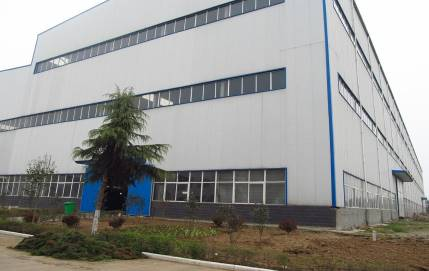
Henan Centbro Machinery (STM) Equipment Co., Ltd is a Zhengzhou-based mining equipment manufacturer founded in 1982 that designs and builds all four configurations and exports them to Russia, the Middle East, Mexico, Africa and other overseas regions. The sections below use the company catalogue and documented project cases to show where each configuration fits.
Why buyers end up comparing four different things
Three habits push buyers into an apples-to-oranges comparison.
First, the word crusher covers two different process duties. Crushing reduces rock to a controlled particle size; grinding reduces it further to powder. A single catalogue page can list both, but the equipment, the power draw and the output unit are different.
Second, quotations often describe a machine rather than a circuit. A price for a jaw crusher says nothing about the screen, the conveyor, the surge bin or the dust control that decide whether the line runs at rate.
Third, the real decision variables are physical rather than commercial. Feed size and abrasiveness, finished particle size, whether the site is fixed, and feed moisture determine the configuration before price becomes meaningful. Writing those four conditions on one page shortens evaluation more than comparing ten quotations.
What the 2026 market and standards context adds
Market research published for 2026 values the global stone crushing equipment market at USD 7.86 billion, up from USD 7.27 billion in 2025, according to Market Research Future. The same source reports that jaw crushers held a 35.2% share of the market by type in 2025, which reflects how often a primary jaw stage anchors a production line.
Two regulatory reference points matter during evaluation. Crushing and grinding machinery traded internationally is classified under HS code 847420, covering machines for crushing or grinding earth, stone, ores or other mineral substances. In the European Union, EN 1009-3:2020 sets specific safety requirements for crushing and milling machines. Buyers evaluating a line for a regulated market should treat the standard as a configuration input, because guards, access platforms and control architecture are easier to specify before the order than after delivery.
The practical implication is simple. Supply is broad and price competition is real, so the differentiator is not whether a supplier can offer a crusher. It is whether the proposed circuit matches the four physical conditions of the project.
Configuration 1: Stone Crusher Production Line
The circuit normally combines a primary jaw crusher, a secondary impact or cone crusher, an optional VSI stage for manufactured sand, and the feeder, screen, conveyor and control elements that tie them together. Capacity is expressed in tonnes per hour of finished aggregate.
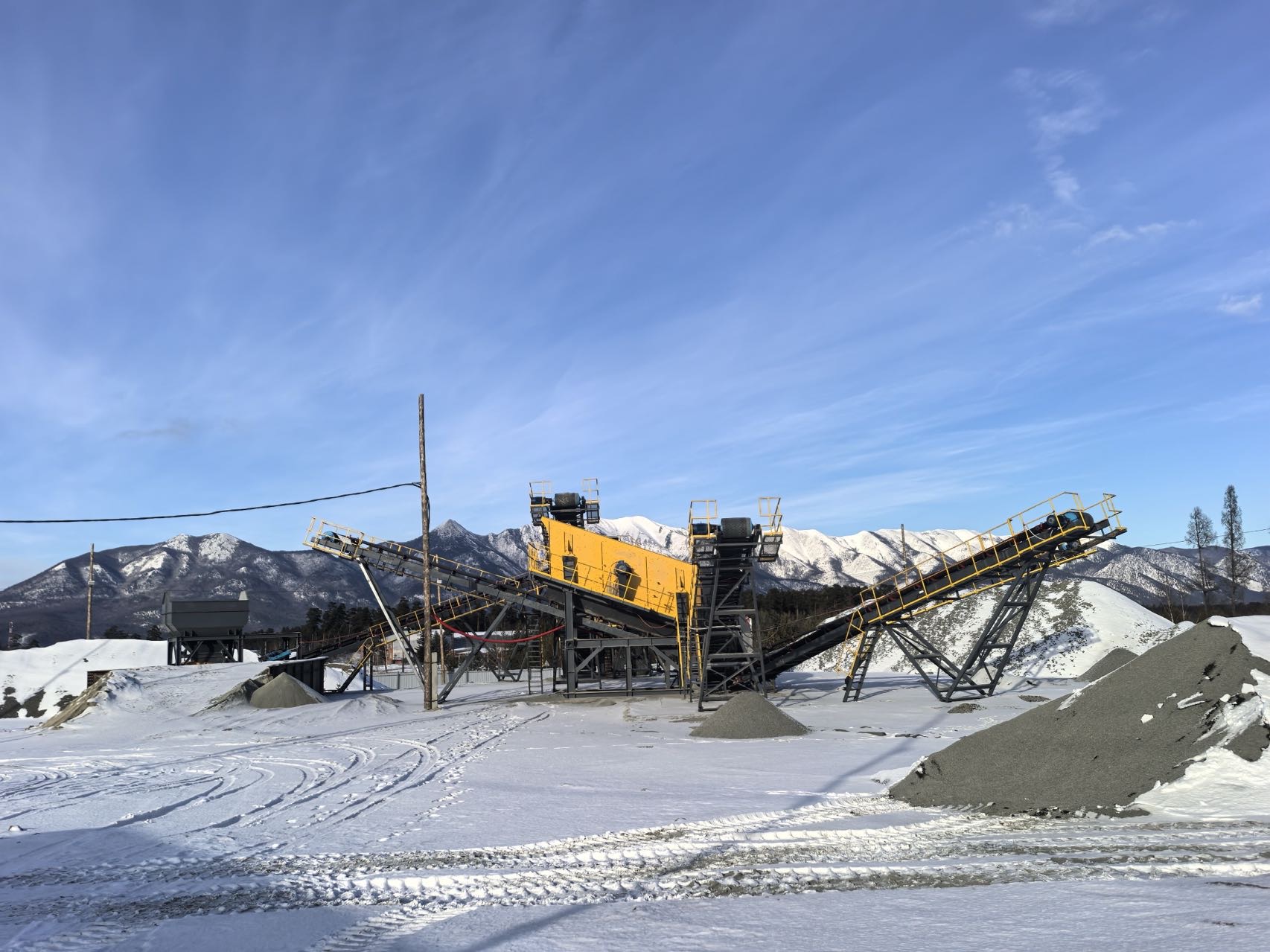
Reference configurations and capacity bands
| Line version | Power | Feed opening | Output |
|---|---|---|---|
| Stone Crusher Production Line with PE-Jaw Crusher | 5.5–75 kW | 250–125 mm | 1–90 t/h |
| Stone Crusher Production Line with Impact Crusher | 37–375 kW | 500–250 mm | 15–350 t/h |
| Stone Crusher Production Line with Cone Crusher | 160–400 kW | 95–330 mm | 120–855 t/h |
| Stone Crusher Production Line with European Jaw Crusher | 110–400 kW | 0–50 mm | 60–520 t/h |
Where it has been deployed
An OEM client in Mongolia has run a jaw crusher as the core front-end equipment in sand and gravel production lines for 10 years. The unit processes raw rock from mountains and rivers and provides qualified feed for the downstream cone crusher and sand making machine; the documented result is more uniform coarse crushed stone, lower wear on downstream equipment and a lower risk of material blockage.
A second OEM project in Russia installed 10 units for concrete aggregate serving infrastructure, water conservancy and real estate projects. The documented outcome is that output exceeded the customer expectation, the finished material met industry requirements, and the process complied with national environmental requirements.
Where the configuration stops
The line is fixed, so it assumes a foundation, a power supply and a site life long enough to justify civil works. It does not turn the finished product into powder, and it has no built-in answer to wet, sticky feed. Those two limits are exactly what the next two configurations address.
Configuration 2: Stone Crusher and Grinding Production Line
Crushing still happens first, but the output-defining stage is grinding and classification. Fineness is the specification that governs the sale, and it is measured in millimetres or mesh rather than in aggregate size bands.
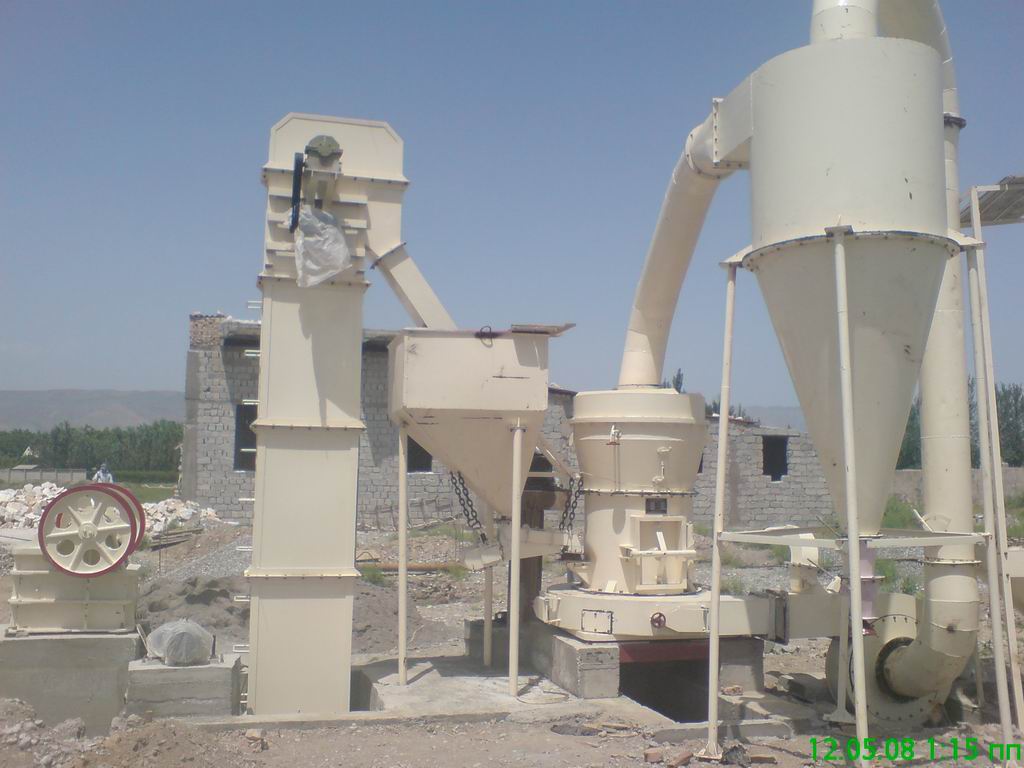
Reference configurations and fineness bands
| Equipment | Power | Fineness | Output |
|---|---|---|---|
| Ball mill B900×1800 | 18.5 kW | 0.075–0.89 mm | 0.65–2 t/h |
| Ball mill B3200×4500 | 800 kW | 0.074–0.4 mm | 20–150 t/h |
| YGM75 | 18.5 kW | 0.613–0.033 mm | 1–3 t/h |
| YGM190 | 250 kW | 0.613–0.033 mm | 9–27 t/h |
| MTW110 | — | 1.6–0.038 mm | 3.5–10 t/h |
| MTW175 | — | 1.6–0.038 mm | 11–25 t/h |
Where it has been deployed
An OEM client in Algeria installed 5 units to grind limestone, calcite, dolomite, barite, talc, quartz, feldspar, coal gangue and slag into fine and ultra-fine powders. The documented fineness range is 80 to 2500 mesh, adjustable to the production requirement, and the powders serve building materials, chemicals, metallurgy, environmental protection and infrastructure. The same case records uniform particle size, a concentrated finished-product distribution and low impurity levels suitable for high-end fillers, coatings and chemical materials.
Where the configuration stops
Throughput is the trade-off. The entry band of a grinding line starts at 0.65–2 t/h, while an aggregate line starts at 1–90 t/h on the jaw version alone. Power is concentrated in the mill, and the value of the line depends entirely on whether a powder market exists for the output. If the project only needs construction aggregate, the grinding stage is over-configuration.
Configuration 3: Portable Stone Crusher
The crushing unit is mounted on a tyre-type or crawler chassis. The crusher type stays the same, whether jaw, impact, cone or VSI, but the plant is transported rather than built in place.
Reference configurations and capacity bands
| Portable configuration | Power | Output |
|---|---|---|
| Portable Stone Crusher with PE-Jaw Crusher | 5.5–75 kW | 1–90 t/h |
| Portable Stone Crusher with Impact Crusher | 37–375 kW | 15–350 t/h |
| Portable Stone Crusher with Multi Cylinder Hydraulic Cone Crusher | 160–400 kW | 120–855 t/h |
| Portable Stone Crusher with VSI Sand Making Machine | 110–400 kW | 60–520 t/h |
| Tyre Type Mobile Jaw Crusher YG938E69 | 91.5 kW | 70–150 t/h |
| Tyre Type Mobile Jaw Crusher YG1349E912 | 146 kW | 150–300 t/h |
| Crawler Mobile Crusher SY-C96 | — | 105–390 t/h |
| Crawler Mobile Crusher SY-C150 | — | 340–880 t/h |
What mobility changes in the evaluation
Mobility shifts cost from civil works to transport and set-up. It also changes how capacity should be read: the number that matters is the output of the specific chassis and crusher combination, not the output of the crusher alone. The YG938E69 tyre-type jaw unit is listed at 70–150 t/h, while the SY-C150 crawler unit is listed at 340–880 t/h, and both are legitimate answers to different site plans.
Where the configuration stops
A portable plant is still a crushing plant. It does not produce powder, and it does not remove moisture. Wet, sticky feed that bridges in the hopper will affect a mobile unit exactly as it affects a fixed one, which is why the drying configuration exists as a separate option.
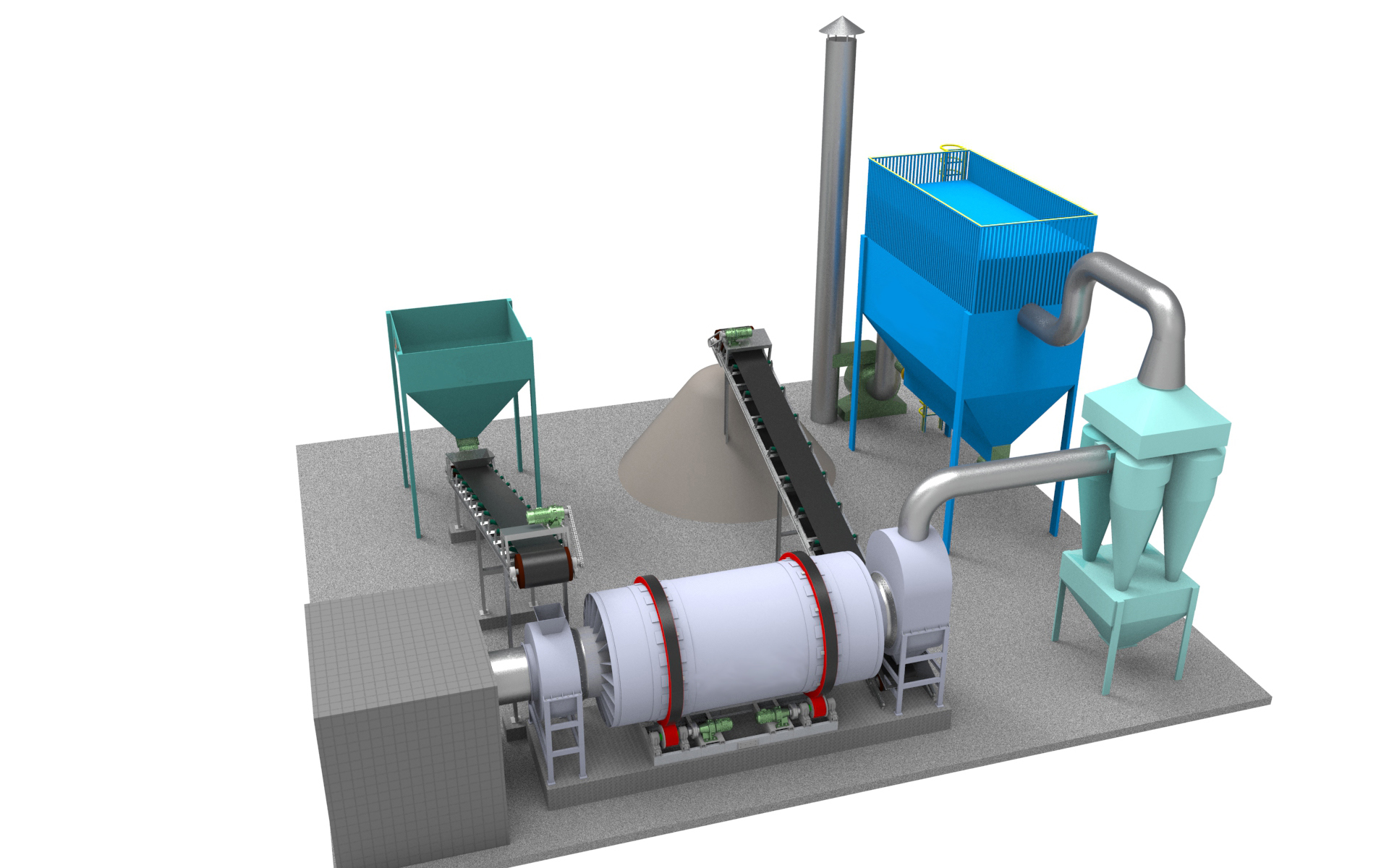
Configuration 4: Crusher Stone Drying Production Line
The drying stage is a rotary drum operation placed where moisture control is needed. It is a process decision rather than a crusher selection, and it is justified only when wet feed is the actual bottleneck.
Reference configurations and capacity bands
| Drum model | Power | Output |
|---|---|---|
| 600×6000 | 3 kW | 0.5–1.5 t/h |
| 1200×12000 | 11 kW | 2–6 t/h |
| 2200×20000 | 30 kW | 12–20 t/h |
| 3000×25000 | 75 kW | 32–40 t/h |
Where it has been deployed
An OEM client in Kazakhstan installed 2 units to dry manufactured sand, pebbles, quartz sand and ore powder. The documented result is that high-moisture material is dried to below 1% moisture content, adjustable as required, with uniform drying and good flowability that supports screening, grinding, packing and use. The same case records reduced clumping, sticking and blockage, improved stability of downstream processes, lower transport cost through volume and weight reduction, and finished quality that meets requirements for commercial concrete, dry-mix mortar and high-end fillers.
The documented operating features are continuous rotary drum operation for uniform heating and high single-machine capacity, adjustable temperature and drying degree, stable drum rotation and transmission suitable for continuous 24-hour production, hot-air recycling for thermal efficiency, and a dust removal device for environmental compliance.
Where the configuration stops
Drying is an energy-intensive step. It adds a heat source, a dust control system and an operating cost that must be justified by a real moisture problem. If the feed is already dry and free-flowing, the drying line adds cost without adding output.
Five-step configuration check
The sequence matters more than the depth of any single step. Running it in order prevents a supplier quotation from setting the agenda.
- Write the finished product specification first. Aggregate size bands point to a crushing line; mesh or micron targets point to a grinding line. This single line eliminates two of the four configurations.
- Record the feed conditions. Maximum feed size, rock type and abrasiveness, and moisture content. Feed opening and crusher type follow from these numbers, not from a preferred brand.
- State capacity in tonnes per hour of finished product. Name the product at the point of measurement. A grinding line rated at 2 t/h and an aggregate line rated at 90 t/h are not comparable numbers.
- Decide whether the site is fixed. A long-life single site favours a stationary line; a moving face or a short project favours a portable chassis.
- Attach compliance and commercial terms. Ask for the conformity documentation that matches the exact model, then confirm OEM scope, MOQ, lead time and testing before the technical review closes.
Use cases by project type
| Project type | Configuration | Documented basis |
|---|---|---|
| Infrastructure and ready-mix aggregate | Stone Crusher Production Line | Russia, 10 units, concrete aggregate for infrastructure, water conservancy and real estate |
| Mine front-end coarse crushing | Stone Crusher Production Line | Mongolia, 5 units, 10 years of service feeding downstream cone and sand-making stages |
| Industrial minerals and fillers | Stone Crusher and Grinding Production Line | Algeria, 5 units, 80–2500 mesh powders from limestone, calcite, dolomite, barite, talc, quartz and slag |
| Wet sand, quartz sand and ore powder | Crusher Stone Drying Production Line | Kazakhstan, 2 units, moisture reduced to below 1%, adjustable |
| Relocating work faces and multi-site contracts | Portable Stone Crusher | Tyre-type and crawler models listed from 70–150 t/h to 340–880 t/h |
Side-by-side comparison
| Decision factor | Stone Crusher Production Line | Stone Crusher and Grinding Production Line | Portable Stone Crusher | Crusher Stone Drying Production Line |
|---|---|---|---|---|
| Primary output | Graded aggregate | Stone powder, mineral powder, micro powder | Aggregate from a movable plant | Dried sand, gravel and mineral powder |
| Core equipment | Jaw, impact, cone, VSI, feeder, screen | Crusher plus ball mill, YGM or MTW and classifier | Jaw, impact, cone or VSI on tyre or crawler chassis | Rotary drum dryer with crushing and screening support |
| Reference capacity | 1–90 t/h (PE jaw) to 120–855 t/h (cone) | 0.65–2 t/h (B900×1800) to 20–150 t/h (B3200×4500) | 1–90 t/h (PE jaw) to 340–880 t/h (SY-C150) | 0.5–1.5 t/h (600×6000) to 32–40 t/h (3000×25000) |
| Mobility | Fixed installation | Fixed installation | Tyre-type or crawler mounted | Fixed installation |
| Moisture handling | Not part of the circuit | Not part of the circuit | Not part of the circuit | Reduces moisture to below 1% in the documented case, adjustable |
| Best fit | Construction and infrastructure aggregate | Industrial minerals, fillers, coatings, chemicals | Moving faces, multi-site contracts, short cycles | Wet feed that blocks screening, grinding or packing |
| Watch-out | Does not produce powder | Throughput far below aggregate lines | Capacity tied to the selected chassis and crusher | Energy-intensive; only justified by a real moisture problem |
FAQ
Which configuration handles hard, abrasive rock without adding a grinding stage?
A Stone Crusher Production Line, sized with a jaw crusher in the primary stage and a cone crusher in the secondary or tertiary stage, is the standard answer for hard rock that must become aggregate. In the STM catalogue the cone version is listed at 160–400 kW and 120–855 t/h, and the European jaw version at 110–400 kW, 0–50 mm feed opening and 60–520 t/h. Hardness is managed through crusher type and chamber selection, not by adding grinding. A grinding stage is added to change the product into powder, and it reduces throughput by an order of magnitude while doing so.
At what moisture level does a drying line become necessary?
There is no single published threshold that applies to every material, because the effect depends on the mineral, the clay content and the downstream process. The practical rule is functional: if moisture causes clumping, sticking, blockage, unstable weighing or rejected finished product at the screen, mill, mixer or packing line, the drying stage belongs in the configuration. The documented Kazakhstan case shows a rotary drum line reducing high-moisture material to below 1% moisture content, adjustable to the requirement, which indicates the achievable range rather than a universal cut-off point.
Can a Portable Stone Crusher replace a stationary line on a long-term quarry?
It can, provided the capacity and the site logistics are checked against the specific model. Portable units are listed from 70–150 t/h on the YG938E69 tyre-type jaw chassis up to 340–880 t/h on the SY-C150 crawler chassis, so the capacity question is answerable with catalogue data rather than opinion. The stationary line retains an advantage where a single long-life site justifies civil works and a permanent power supply. The decision should be made on site life and relocation cost, not on the assumption that mobile always means lower output.
What compliance documents should be requested before ordering?
Ask for documentation that matches the exact model, not the company in general. Three reference points help structure the request. First, EN 1009-3:2020 sets specific safety requirements for crushing and milling machines in the European Union, so a supplier shipping into the EU should be able to explain how the model meets it. Second, STM holds a product patent registered with CNIPA under number 14247490, issued 24 September 2021 and valid to 25 December 2030. Third, a CE certificate numbered 2020SZ0704051 is recorded with an issue date of 4 August 2020 and an expiry date of 4 August 2026; buyers should confirm the current validity, the product scope it actually covers, and the declaration of conformity for the ordered model. For customs purposes the relevant classification is HS 847420.
What are the MOQ, lead time and next step for a configuration quote?
STM operates OEM production with voltage and logo customization, a minimum order quantity of 2 units, a 30-day lead time and 100% testing before shipment. A configuration quotation can be prepared once five inputs are available: finished product specification, maximum feed size and rock type, feed moisture, required tonnes per hour, and the destination market with its compliance requirements. Buyers who want to review the equipment range first can download the catalogue, request a sample or schedule a technical review with the sales team at Kevin@centbro.com or +86 187-3712-0960.
Conclusion
The four configurations are not competing answers to one question. They answer four different questions. A Stone Crusher Production Line answers how to turn rock into graded aggregate at rate. A Stone Crusher and Grinding Production Line answers how to turn stone into powder at a specified fineness. A Portable Stone Crusher answers where the plant must operate when the work face moves. A Crusher Stone Drying Production Line answers what to do when moisture, not hardness, is stopping the plant.
The evaluation shortcut is to write the four physical conditions first — product, feed, capacity, site — and then read every quotation against them. When the conditions are clear, the configuration choice usually makes itself, and the commercial negotiation starts from a defined scope rather than from a machine price.
Next step: review the line against your own numbers
Send the finished product specification, feed size and rock type, moisture, required output and destination market. STM will respond with a configuration proposal, the matching model data and the compliance documents for the exact equipment.
Catalogue download: STM Crusher Catalogue (PDF)
Email: Kevin@centbro.com | WhatsApp: +86 187-3712-0960
Website: centbrocrusher.com
Have Questions or Need More Details?
Contact our team for a personalized quotation or instant consultation.
Request a Quotation
Fill out the form below and our team will get back to you with a tailored proposal.
WhatsApp Direct Chat
Prefer to chat in real-time? Message us on WhatsApp for instant assistance & quick answers.
- Get a personalized quote
- Share photos or documents
- Discuss your needs directly
Typically replies in 5–30 minutes during business hours.