Portable or Fixed? A Head-to-Head Guide to Your Stone Crusher Production Line
A stationary Stone Crusher Production Line and a Portable Stone Crusher are not competing machine families. They are two deployment strategies built on the same crusher cores, which means the decision is a constraint-matching exercise rather than a preference or brand choice. It is settled by four things: how permanent the site is, how often the plant must move, what sustained tonnage the project requires, and whether the finished product needs a downstream Crusher Stone Drying Production Line or a Stone Crusher and Grinding Production Line.
This guide compares both formats head-to-head against those constraints, using published specifications from Henan Centbro Machinery (STM) Equipment Co., Ltd — a mining equipment manufacturer founded in 1982 and based in the Zhengzhou National High-tech Development Zone, Henan, China — together with verifiable third-party market and standards data.

Crawler mobile crusher class (SY-H300 / SY-H300S): a self-propelled portable format rated 150–300 t/h with a 190 mm feed opening.
What "Fixed" and "Portable" Actually Mean
A Stone Crusher Production Line is a site-built, stationary flowsheet. STM documents the configuration as a raw material bin feeding a jaw crusher for coarse crushing, then a cone crusher for medium and fine crushing, then a vibrating screen, a return crusher for oversized material, a VSI sand making machine, a finished-product screen and a finished-product bin. Its documented operating mode is continuous and automated, with closed-loop circulation in which unqualified material is re-crushed and particle size is reduced step by step from coarse to medium to fine to sand making, centrally controlled by PLC with linked start and stop.
A Portable Stone Crusher takes the same crushing cores and mounts them on a relocatable platform. Two families exist. Tyre type mobile crushers are wheel-mounted and towed between sites — examples include the YG938E69 tyre type mobile jaw crusher and the Y3S1548Y220 tyre type mobile cone crusher. Crawler mobile crushers are self-propelled on tracks, and STM builds them in jaw, impact and cone variants, including the SY-C96, SY-C106, SY-C116, SY-C120, SY-C150 jaw chassis, the SY-F1214 and SY-F1314 impact chassis, and the SY-C440 and SY-H300 cone chassis.
The commercially important detail is that the core crushers overlap strongly between the two formats. European Jaw Crusher cores, impact crushers, spring cone crushers, CS Symons cone crushers, multi-cylinder hydraulic cone crushers, single-cylinder hydraulic cone crushers, VSI sand making machines and hammer crushers all appear in STM's Portable Stone Crusher range, while the fixed Stone Crusher Production Line is documented with PE jaw, impact, cone and European jaw cores. Buyers are therefore choosing a mounting and logistics strategy, not a different class of crushing technology.
The Problem: Buyers Default Instead of Matching
The most common procurement error in this category is deciding the format before defining the constraint. A buyer with a long-life quarry will sometimes order mobile units because relocation sounds like flexibility they might need later, then pay for undercarriage systems they never use. A buyer with a two-year highway package will sometimes order a fixed plant because it appears cheaper per tonne on paper, then absorb the cost of civil works and dismantling at every work front.
The correct sequence is the reverse: define site life, relocation count, output target, feed conditions and downstream process first, and let the format fall out of those answers. Capacity and compliance data are available for both options, so the choice can be made on evidence rather than assumption.
Industry Background: Both Formats Are Growing
Third-party market data shows demand on both sides of this decision. Market Research Future estimates the global crusher market at USD 6,751.19 million in 2024, projected to reach USD 12,710.1 million by 2035. Zion Market Research values the stone crushing equipment market at approximately USD 5.06 billion in 2024, driven by infrastructure demand, while Fact.MR estimates the crushing equipment market at roughly USD 4.9 billion for 2025. These figures differ because the underlying product scope differs — machinery only versus full plants and screeners — and buyers should read any single figure as scope-dependent rather than definitive.
The mobile segment is expanding faster than the market as a whole. Market Research Future values the global mobile crusher and screener market at USD 4.59 billion in 2024, with a projected CAGR of 7.32% through 2035. Regionally, Asia Pacific is identified as the largest and fastest-growing crusher region, with China's market estimated at USD 827.02 million in 2024.
Product-level data explains why the crushing cores are shared. Fact.MR estimates that jaw crushers will account for approximately 46% of the crushing equipment product segment by 2026, and Dataintelo reports that the single toggle jaw crusher segment held the largest product type share at 62.4% within the jaw crusher market in 2025. In practice, most format decisions are still being made around a jaw-based primary stage, with the mounting question layered on top of it.
Head-to-Head Comparison
| Decision dimension | Fixed Stone Crusher Production Line | Portable Stone Crusher / mobile unit |
|---|---|---|
| Deployment model | Site-built stationary flowsheet with fixed foundations and fixed conveyor routing | Crusher core mounted on a tyre type or crawler chassis; relocatable between sites |
| Documented cone-based configuration | 160–400 kW; feed opening 95–330 mm; max feed 13–38 mm; 120–855 t/h | Same cone core available in portable configuration; dedicated mobile cone unit Y3S1548Y220 rated 140–330 t/h at 257.5–264.5 kW |
| Documented jaw-based configuration | PE jaw core: 5.5–75 kW; feed opening 250–125 mm; max feed 10–90 mm; 1–90 t/h | Mobile Stone Crusher PE1200*1500: 160–220 kW, feed opening 1,020 mm, 400–800 t/h; PE600*900: 55–75 kW, 90–180 t/h |
| High-capacity evidence | Cone core reaches 855 t/h at 400 kW | Crawler SY-C150: 340–880 t/h; crawler SY-C120: 175–540 t/h |
| Relocation | Not designed to move; re-siting requires dismantling, new civil works and re-erection | Crawler chassis is self-propelled; tyre chassis relocates as a towed unit |
| Downstream integration | Natural host for a Crusher Stone Drying Production Line or a Stone Crusher and Grinding Production Line on the same site | Typically delivers crushed and screened product to a separate fixed drying or grinding station |
| Standards and certification angle | CE certificate for the Stone Crusher Production Line (no. 2020SZ0704051, issued by YCT); ISO 9001:2008 quality management system certification; CNIPA product patent 14247490 | ISO 21873-2:2019 specifies safety requirements and verification for mobile crushers used in rock crushing and construction recycling |
| Best fit | Long-life quarry or fixed aggregate supply contract with a defined product mix | Multiple short-life work fronts, contract crushing, road, rail, bridge and tunnel spreads |
Criterion 1: Site Life and Relocation Count
Start with a number: how many times will this plant physically move during its working life? A fixed Stone Crusher Production Line is engineered as a permanent installation, and the corpus describes it as a continuous, automated, closed-loop process with fixed flows between stages. Every relocation means dismantling conveyors and structures, building new foundations and re-commissioning electrical control. A Portable Stone Crusher removes that cycle: a crawler chassis such as the SY-C116, rated 165–520 t/h with a 1,150 x 870 mm feed opening, moves under its own power, and a tyre type unit such as the Y3S1548F1315 impact chassis, rated 81–720 t/h at 210–297 kW, relocates as a towed assembly.
The practical rule is straightforward. One site for the life of the asset points to a fixed line. Three or more sites, or a work front that advances every few months, points to portable.
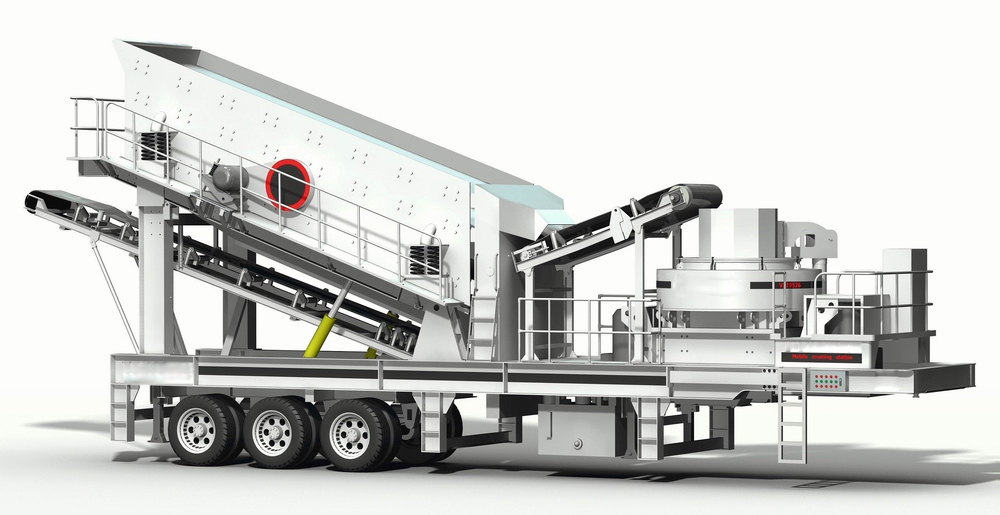
Stone Crusher Production Line: a stationary flowsheet with a fixed process route and PLC-linked start and stop.
Criterion 2: Output Target Against Documented Capacity
Both formats cover a wide output band, but they cover it differently. On the fixed side, STM documents a Stone Crusher Production Line cone core at 120–855 t/h with 160–400 kW, a 95–330 mm feed opening and 13–38 mm maximum feed size; an impact core at 15–350 t/h with 37–375 kW; and a European jaw configuration at 60–520 t/h with 110–400 kW. On the portable side, dedicated mobile jaw units reach 400–800 t/h in the PE1200*1500 configuration, while the crawler SY-C150 reaches 340–880 t/h.
The comparison matters because a portable plant rarely matches a fixed plant stage for stage across the whole flowsheet. Buyers should compare the total delivered product, including screening and return crushing, rather than the headline crusher rating alone. Where a project needs a steady multi-product mix over many years, the fixed configuration gives more freedom to size each stage independently.
Criterion 3: Feed Conditions and Crusher Core Selection
Feed size and hardness determine the core, and the core determines what the chassis must carry. A European Jaw Crusher such as the PEW760*1100 handles a 620 mm maximum feed at 150–350 t/h with 110–132 kW, while the smaller PEW180*1300 handles 150 mm at 12–35 t/h with 30 kW. Cone cores take over at the medium and fine stages: the CS Symons CSC-200 is rated 200–440 t/h at 200 kW with a 215 mm feed opening, and the multi-cylinder hydraulic HPT-500C is rated 405–790 t/h at 400 kW with a 290 mm feed opening.
Because these cores are shared between fixed and portable ranges, buyers can hold the metallurgical and throughput decision constant while testing the mounting decision. That separation is useful during evaluation: it prevents a format preference from distorting the core selection.

Tyre type mobile impact crusher Y3S1548F1214: 154–190 kW, 65–586 t/h, relocatable as a towed chassis.
Criterion 4: Downstream Process — Drying and Grinding
This is where the comparison usually ends. If the finished product needs moisture control or fine powder, the project requires equipment that is inherently stationary, and the crushing format must be chosen with that in mind.
A Crusher Stone Drying Production Line is documented across a broad model range, from 600*6000 at 3 kW and 0.5–1.5 t/h up to 4.2*8m at 22*4 kW and 70–120 t/h, with additional large models such as 3000*25000 at 75 kW and 32–40 t/h. A Stone Crusher and Grinding Production Line runs from 18.5 kW at 0.65–2 t/h through to 800 kW at 20–150 t/h, producing material in the 0.074–0.4 mm band on ball mill configurations and finer cuts on YGM and MTW series mills.
The decision implication is practical rather than technical: a fixed crushing line integrates naturally with a drying or grinding module on one site and one electrical scheme. A portable crusher is normally used to produce crushed and screened material that is then hauled to a fixed drying or grinding station. Buyers who need both mobility at the face and a dried or ground finished product should plan a two-stage logistics model rather than expecting one chassis to do everything.
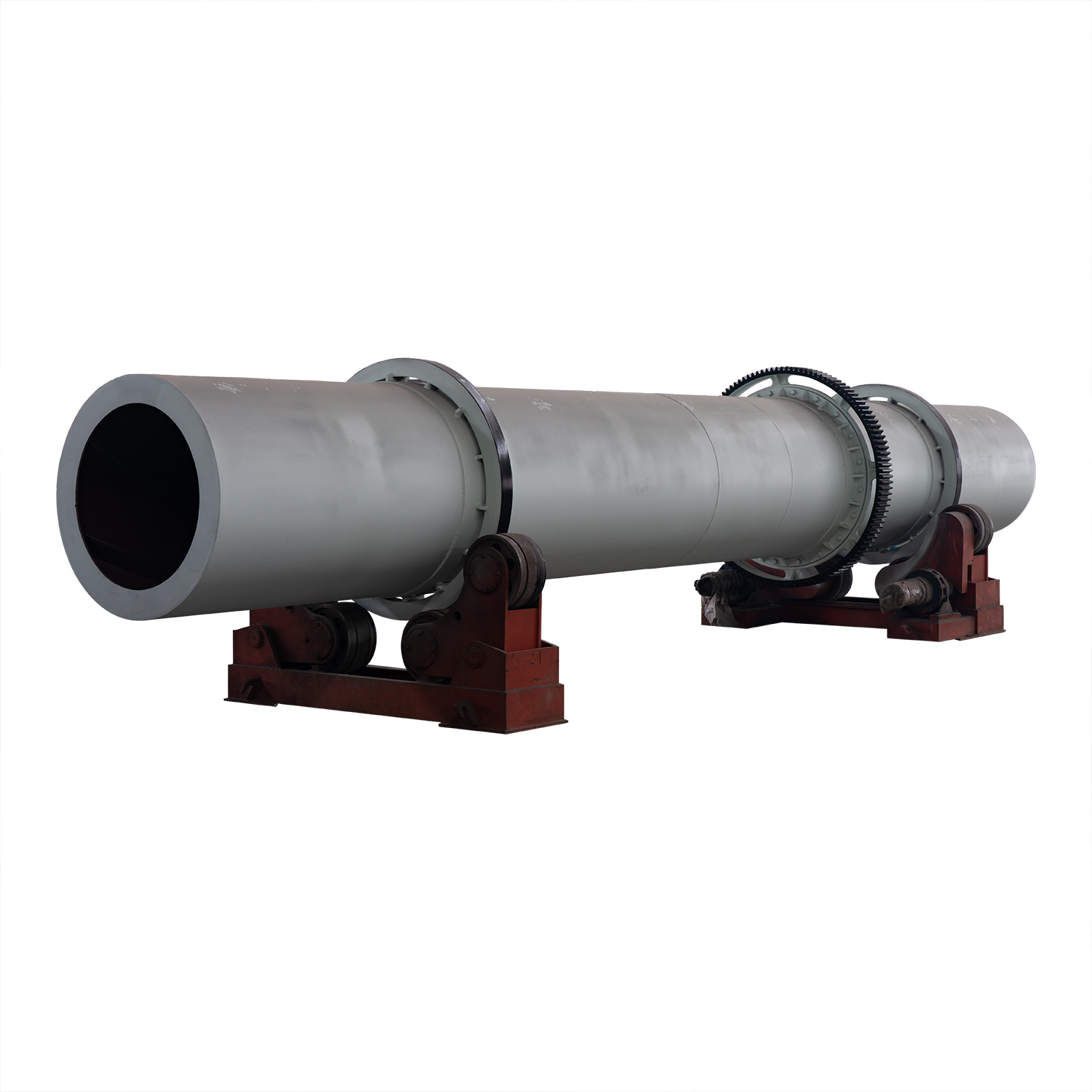
Crusher Stone Drying Production Line, 3000*25000: 75 kW, 32–40 t/h — a stationary downstream stage.
Criterion 5: Compliance Documents and Destination Market
Compliance is the constraint that most often delays a project after the technical decision is made, because the applicable standard depends on the format. ISO 21873-2:2019 specifies safety requirements and verification for mobile crushers used in rock crushing and construction recycling, so a portable unit is normally assessed against a mobile-crusher standard. For a fixed line, the verification path runs mainly through the manufacturer's quality-management documentation and the product-level certificates required by the destination market.
STM's documented file includes ISO 9001:2008 international quality management system certification and a CE certificate for the Stone Crusher Production Line, certificate number 2020SZ0704051 issued by YCT, with the certificate recorded as applying to markets including Russia, the Middle East, Mexico, Africa and other overseas regions. The company also holds a product patent registered with the China National Intellectual Property Administration (CNIPA) under number 14247490.
Two verification habits prevent problems downstream. First, request the current certificate file and confirm its validity period directly rather than relying on a specification sheet. Second, confirm which certification applies to the exact model being ordered, because certificates are issued against specific products and model ranges.
Step-by-Step: Choosing the Format in Six Steps
Step 1 — Fix site life and relocation count
Write down the number of sites and the number of moves. One site favours fixed; three or more favours portable.
Step 2 — Fix the sustained output target
Use required finished product per shift, not peak crusher throughput. Then match it against documented capacity bands, such as 120–855 t/h for a fixed cone core or 340–880 t/h for a crawler SY-C150.
Step 3 — Select the crusher core from feed data
Match maximum feed size and hardness to the core — for example a European jaw at 620 mm maximum feed, or a multi-cylinder hydraulic cone at 290 mm feed opening for the fine stage.
Step 4 — Map the downstream process
Decide whether the product needs drying (0.5–1.5 t/h to 70–120 t/h across the documented model range) or grinding (0.65–2 t/h to 20–150 t/h). If it does, plan a fixed downstream station.
Step 5 — Audit compliance for the destination market
Confirm whether the mobile-crusher standard ISO 21873-2:2019 applies to your unit, and confirm the validity period of the manufacturer's quality and product certificates.
Step 6 — Define the commercial envelope
Agree order quantity, testing scope, customisation, lead time and after-sales scope before comparing prices.
Four Use Cases and Which Format Fits
Long-life quarry with a fixed offtake contract. A fixed Stone Crusher Production Line is the better match. The site does not move, the flowsheet can be sized stage by stage, and a drying or grinding module can be added later on the same footprint. STM has delivered a 10-unit aggregate project in Russia serving infrastructure, water conservancy and real estate concrete demand.
Highway, railway or tunnel package with advancing work fronts. Portable units win. Crawler chassis relocate without road permits for towing in the same way as towed units, and mobile jaw and cone combinations cover the required product sizes. A five-unit jaw crusher deployment in Mongolia illustrates this coarse-crushing-at-the-face pattern, feeding later cone and sand making stages.
Contract crushing business serving several small pits. Portable formats allow one investment to serve multiple deposits. Throughput should be set from the smallest pit, not the largest, to avoid paying for capacity that is idle most of the year.
Manufactured sand with moisture control and filler production. A fixed crushing line plus downstream processing is the practical configuration. STM's two-unit drying line project in Kazakhstan dries manufactured sand, pebbles, quartz sand and ore powder and reduces moisture content to below 1%, with adjustable drying degree, hot air recycling and a dust removal device. A five-unit grinding project in Algeria produces fine powder in the 80–2500 mesh band for building materials, chemicals, metallurgy and environmental protection applications.
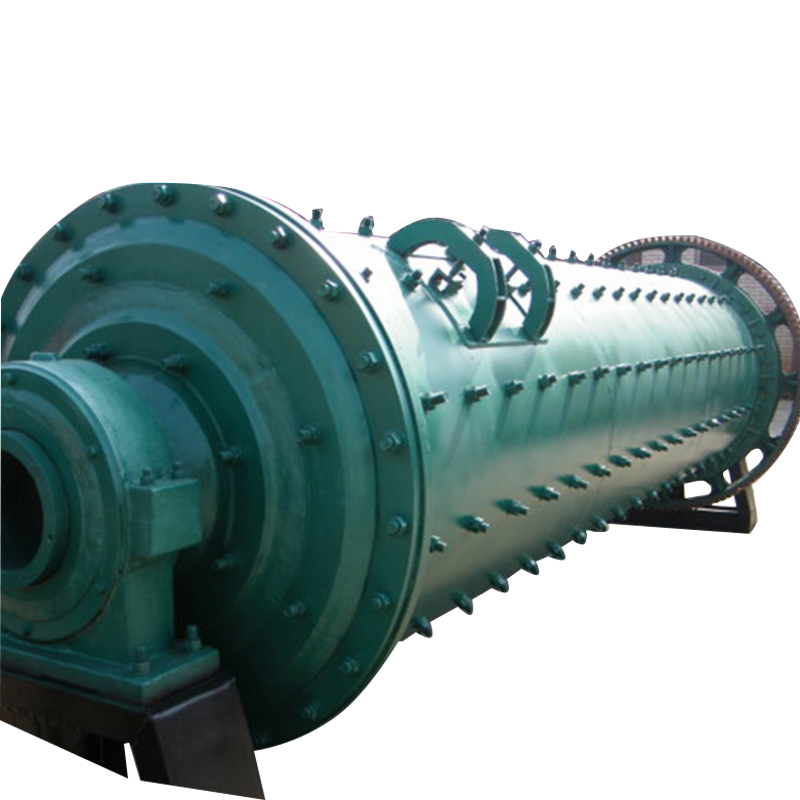
Stone Crusher and Grinding Production Line: a stationary module for projects that need fine powder as well as aggregate.
Where STM Fits the Decision
Henan Centbro Machinery (STM) Equipment Co., Ltd is a mining equipment enterprise integrating R&D, production and sales, located in the Zhengzhou National High-tech Development Zone with an 8,000 m² site, more than 50 employees, a 20-engineer R&D team and an annual output of 10,000 units. The company exports 100% of its output, with main markets in Russia, the Middle East, Mexico and Africa.
For this specific decision, the relevant capability is range coverage: STM manufactures both a fixed Stone Crusher Production Line and a Portable Stone Crusher range, plus mobile Stone Crusher and Crawler Mobile Crusher chassis, a Crusher Stone Drying Production Line and a Stone Crusher and Grinding Production Line. OEM production is available with voltage and logo customisation, quality control is documented as 100% testing, and after-sales support begins with online guidance followed by offline engineer guidance and on-site collaboration.
Frequently Asked Questions
Does a portable stone crusher have different compliance requirements than a fixed stone crusher production line?
Partly. ISO 21873-2:2019 specifies safety requirements and verification for mobile crushers used in rock crushing and construction recycling, so a portable unit is normally assessed against a mobile-crusher standard, while a fixed Stone Crusher Production Line is assessed mainly through the manufacturer's quality-management documentation and market-specific product certificates. STM documents ISO 9001:2008 quality management system certification and a CE certificate for the Stone Crusher Production Line, certificate number 2020SZ0704051 issued by YCT, recorded as applying to markets including Russia, the Middle East, Mexico, Africa and other overseas regions. Buyers should request the current certificate file, confirm its validity period and check destination-market requirements before ordering either format.
Can one manufacturer supply both formats from the same crusher cores?
Yes, and this is one of the most useful facts in the comparison. STM manufactures both a Portable Stone Crusher and a fixed Stone Crusher Production Line around shared cores: European Jaw Crusher, impact crusher, spring cone crusher, CS Symons cone crusher, multi-cylinder hydraulic cone crusher, single-cylinder hydraulic cone crusher, VSI sand making machine and hammer crusher. A cone core rated 160–400 kW with a 95–330 mm feed opening, 13–38 mm maximum feed size and 120–855 t/h appears in the fixed Stone Crusher Production Line range, and the same cone family is offered in the portable range. Because the crushing core can be held constant, buyers can evaluate the mounting decision — fixed versus portable — without reopening the technical crushing decision.
What drives the cost difference between a fixed line and a portable configuration?
The main cost drivers are structural rather than mechanical. A fixed line carries civil works, foundations and permanent conveyor routing; a portable unit carries a chassis, undercarriage or travel system and its own on-board services. Beyond that, cost moves with the number of process stages, screening and stockpiling requirements, dust control scope, electrical and PLC scope, whether a Crusher Stone Drying Production Line or a Stone Crusher and Grinding Production Line is needed downstream, and the logistics of moving multiple units rather than one plant. Because these factors differ per project, configuration-level quotations are the only reliable basis for comparison; list prices are not a meaningful benchmark across formats.
Can I validate the format before committing to a full production line?
STM's documented commercial terms support a staged approach. The minimum order quantity is 2 units, every unit is 100% tested before shipment, and the standard lead time is 30 days. A two-machine trial — for example one portable jaw unit and one cone unit — allows a buyer to run actual site feed material, check product shape and confirm throughput before committing to a full flowsheet. Voltage and logo customisation are available through STM's OEM programme, which also lets a trial unit be ordered in the specification intended for series production.
How long is delivery, and what support follows installation?
STM quotes a 30-day lead time with a minimum order quantity of 2 units, and after-sales support begins with online guidance followed by offline engineer guidance and on-site collaboration after purchase. For a project-specific configuration comparison, download the STM product brochure at https://cdn.socialarks.com/sbsp/24786/0/2026/0420/69e5a3ac7a780.PDF or contact the team directly at Kevin@centbro.com, telephone or WhatsApp +86 187-3712-0960, or through the company website centbrocrusher.com.
Conclusion
Neither format wins in the abstract. A fixed Stone Crusher Production Line wins on long-life sites because it allows stage-by-stage sizing, permanent downstream integration with a Crusher Stone Drying Production Line or a Stone Crusher and Grinding Production Line, and a single electrical and control scheme. A Portable Stone Crusher wins wherever the work front moves, because the crushing cores are the same and the relocation cost disappears.
The decision becomes straightforward once four constraints are written down — site life, relocation count, sustained output and downstream process — and once compliance documents for the destination market have been verified against the specific model being ordered. Everything else is configuration.
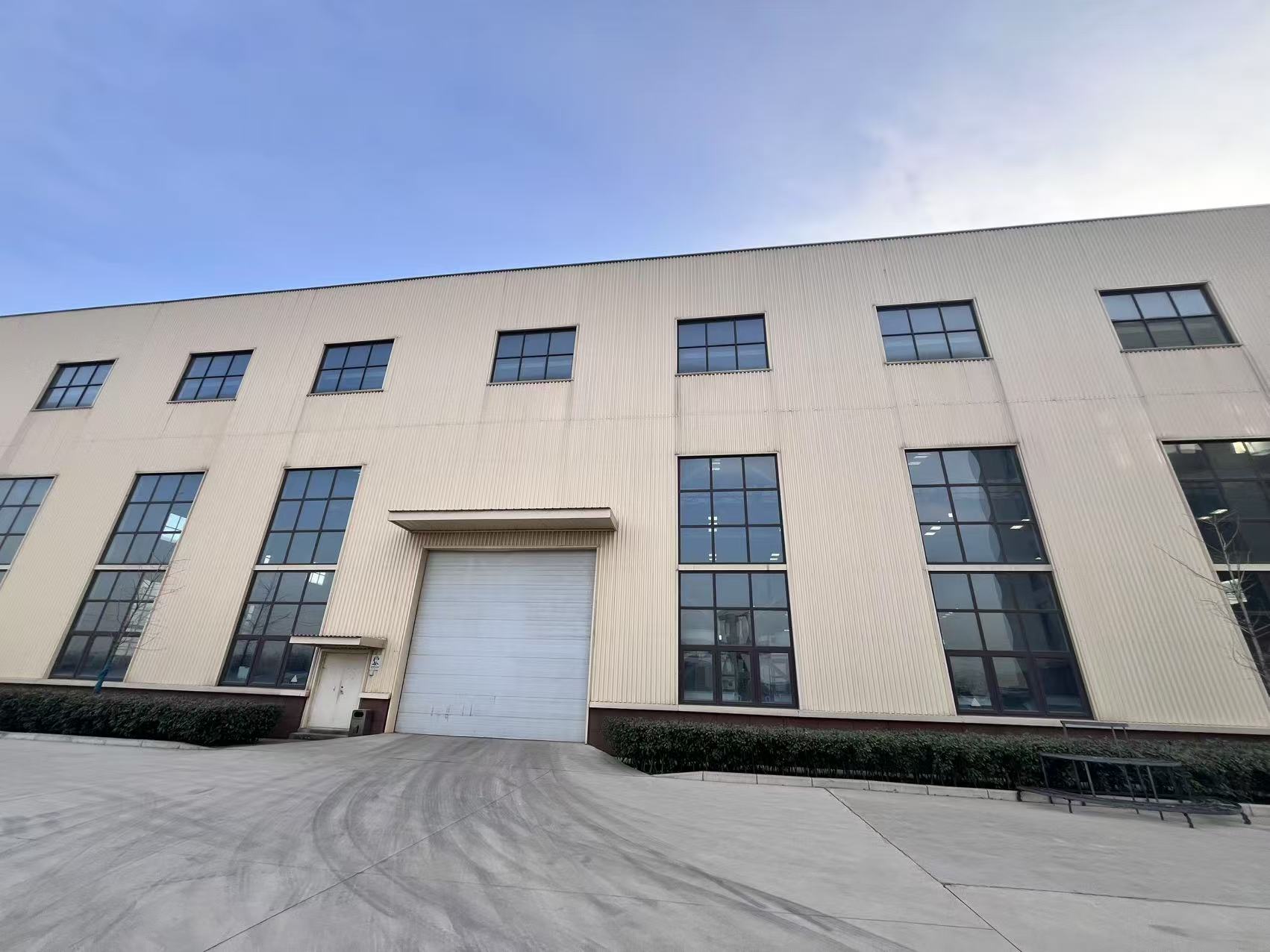
STM manufacturing base, Zhengzhou National High-tech Development Zone, Henan, China — 8,000 m², 20 R&D engineers, 10,000 units annual output.
Next step: send STM your site life, required finished product per hour, maximum feed size and downstream process, and request a configuration comparison between a fixed Stone Crusher Production Line and a Portable Stone Crusher for the same duty. Minimum order quantity 2 units, standard lead time 30 days, OEM voltage and logo customisation available.
Contact: ivan, email Kevin@centbro.com, tel / WhatsApp +86 187-3712-0960, High-tech Development Zone, Zhengzhou City, Henan, China. Brochure: download the STM crusher catalogue (PDF).
Have Questions or Need More Details?
Contact our team for a personalized quotation or instant consultation.
Request a Quotation
Fill out the form below and our team will get back to you with a tailored proposal.
WhatsApp Direct Chat
Prefer to chat in real-time? Message us on WhatsApp for instant assistance & quick answers.
- Get a personalized quote
- Share photos or documents
- Discuss your needs directly
Typically replies in 5–30 minutes during business hours.