From Single Crusher to Full Production Ecosystem: A Long-Term Buyer Guide
From Single Crusher to Full Production Ecosystem: A Long-Term Buyer Guide
Crusher procurement is easy to treat as a one-time transaction: compare price, agree on delivery, receive the equipment, and move on. In long-cycle mining and infrastructure projects, however, the first crusher is often a starting point rather than an endpoint. Capacity upgrades, additional crushing stages, spare-part turnover, and next-site projects create a second and third procurement cycle. Buyers in the Decision and Execution stage therefore need to judge suppliers by their long-term ecosystem value, not only by an initial quotation.
This guide explains why long-term thinking matters, what a crushing equipment ecosystem should include, and how Henan Centbro Machinery(STM) Equipment Co., Ltd, a mining machinery manufacturer based in Zhengzhou High-tech Development Zone, is structured to support repeat and multi-phase buyers. It is written for project owners, distributors, and procurement teams responsible for selecting a crusher partner that can remain useful over many years.
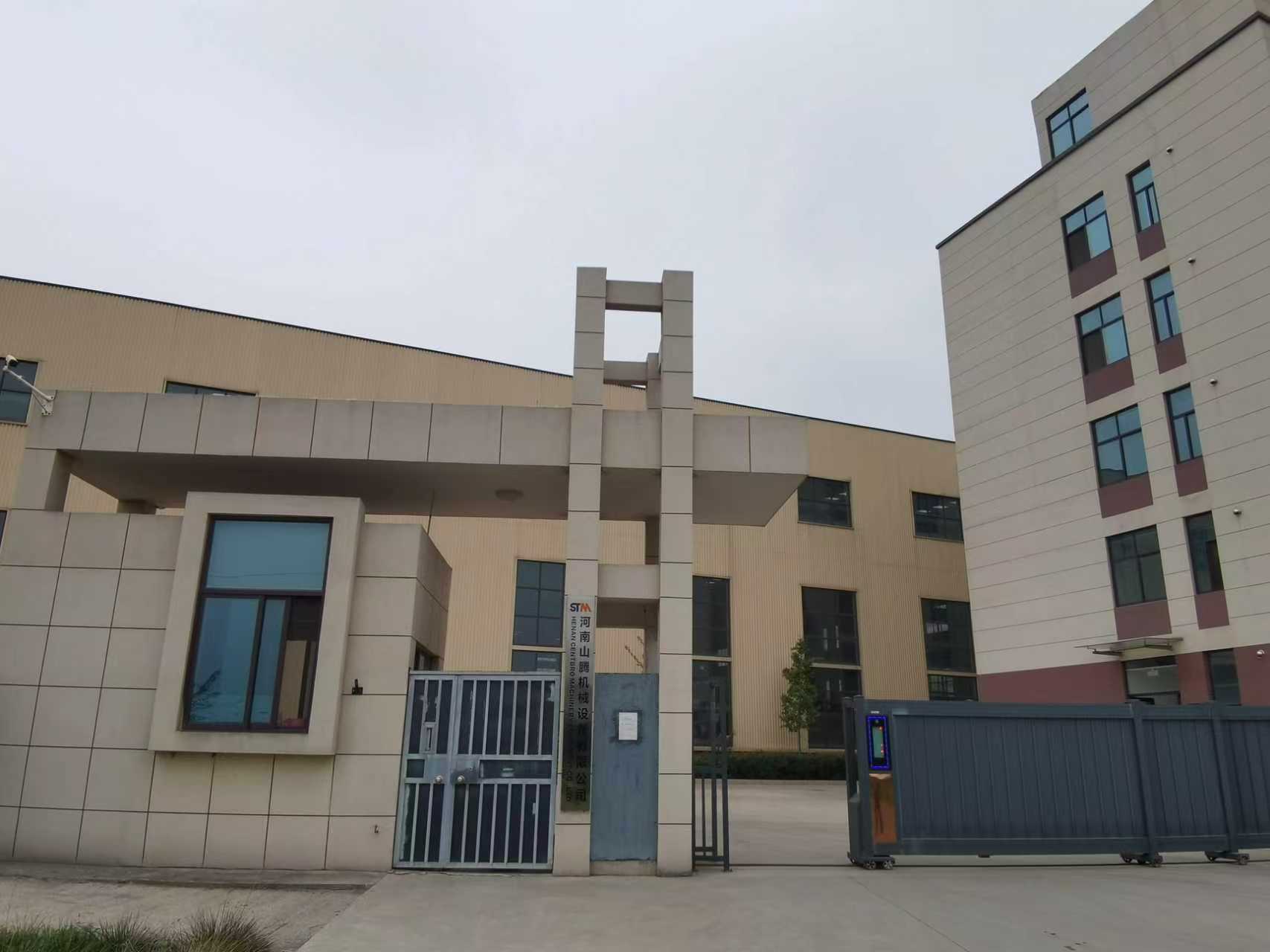
Factory facility of Henan Centbro Machinery(STM) Equipment Co., Ltd, Zhengzhou, China
Why long-term ecosystem thinking matters in crusher buying
A crusher rarely operates in isolation. In most stone processing operations it is connected to feeding equipment, screening equipment, conveyors, stockpiles, and often to a sand-making module or grinding module. The real production result depends on how well these machines are matched. When a project expands, the question is not only whether a new crusher has the right capacity, but whether it can work with equipment already installed in the plant.
The execution-stage risks often appear after delivery. Buyers may need replacement wear parts sooner than expected. An operator may need training before the plant can run at full performance. A humidity-heavy material may need a different configuration. A distributor may need to place several orders across different projects and requires consistent supply. These are not one-order problems. They are ecosystem problems.
For a buyer selecting a supplier, this shifts the evaluation from a narrow set of machine parameters to a broader set of supplier capabilities: production capacity, equipment range, installation service, certification coverage, risk-control discipline, and procurement flexibility.
Global market signals point toward longer, multi-phase crusher investments
Third-party research also points to a longer investment cycle for crushing equipment. According to Market Research Future, the global crusher market was estimated at USD 6,751.19 million in 2024 and is projected to reach USD 12,710.1 million by 2035. A separate estimate from Zion Market Research stated that the stone crushing equipment market was valued at approximately USD 5.06 billion in 2024, driven by rising infrastructure demand. The difference between the two figures mainly reflects how widely each report defines crushing equipment, but the direction of demand is consistent.
Regional data support the same conclusion. Market Research Future identifies Asia Pacific as the largest and fastest-growing region for crushers, with China's market estimated at USD 827.02 million in 2024. The same research house valued the global mobile crusher and screener market at USD 4.59 billion in 2024, with a projected CAGR of 7.32% through 2035. Mobile equipment demand is another signal that buyers may relocate machines between phases or move them to new sites.
These trends are relevant to STM, whose company profile states that its products are continuously exported to Russia, Kazakhstan, Philippines, Middle East, South America, Africa and many other countries and regions. For a Decision-stage buyer, this kind of export footprint means the supplier is already used to cross-border logistics, documentation, and after-sales service across multiple project environments.
What a long-term crusher partner should offer: the STM picture
A long-term crusher partner should be assessed across four practical assets: production capacity, machine range, commissioning capability, and lifecycle risk control. STM makes these visible in its company profile and procurement documentation.
Production capacity supports repeat orders and distributor schedules
Commissioning documents for STM state that the manufacturer's monthly production capacity is 8,000 units. For a buyer, this number matters for reasons that go beyond simple volume. It suggests the factory has the ability to handle repeat orders, phased deliveries, and the spare-part pressure that can appear after the first machine is installed. A supplier with very limited capacity may be able to deliver one machine well, but can struggle when a project expands rapidly or when a distributor needs multiple units within one season.
Capacity alone is not a guarantee of quality, but it is a necessary condition for long-term supply. Buyers should treat capacity claims as a starting point for factory audits and production scheduling discussions.
A product line that grows from one machine to a production line
The STM catalog covers the full crushing and processing chain. Main products include European Jaw Crusher, Impact Crusher, Spring Cone Crusher, CS Symons Cone Crusher, Multi Cylinder Hydraulic Stone Cone Crusher, VSI Impact Sand Making Stone Crusher Machine, Hammer Crusher, Rock Crusher, portable and mobile crushing equipment, and supporting machines such as feeders, screens, washing equipment and belt conveyors.
For buyers moving from a single crusher to a complete installation, STM also offers production-level solutions under names such as Crusher Stone Sand-Making Production Line, Crusher Stone Drying Production Line, Stone Crusher and Grinding Production Line, and Stone Crusher Production Line. This breadth allows a project to start with one primary crusher and later add a cone crusher for fine crushing, or a VSI sand making machine for aggregate shaping, without starting from zero with a different supplier.
The mobile segment is useful for contractors who work on changing sites. STM's portfolio includes Mobile Crusher, Mobile Stone Crusher, Tyre Type Mobile Crusher, and Crawler Mobile Crusher. A mobile configuration can be treated as a first investment because it can be moved and redeployed as project priorities change.
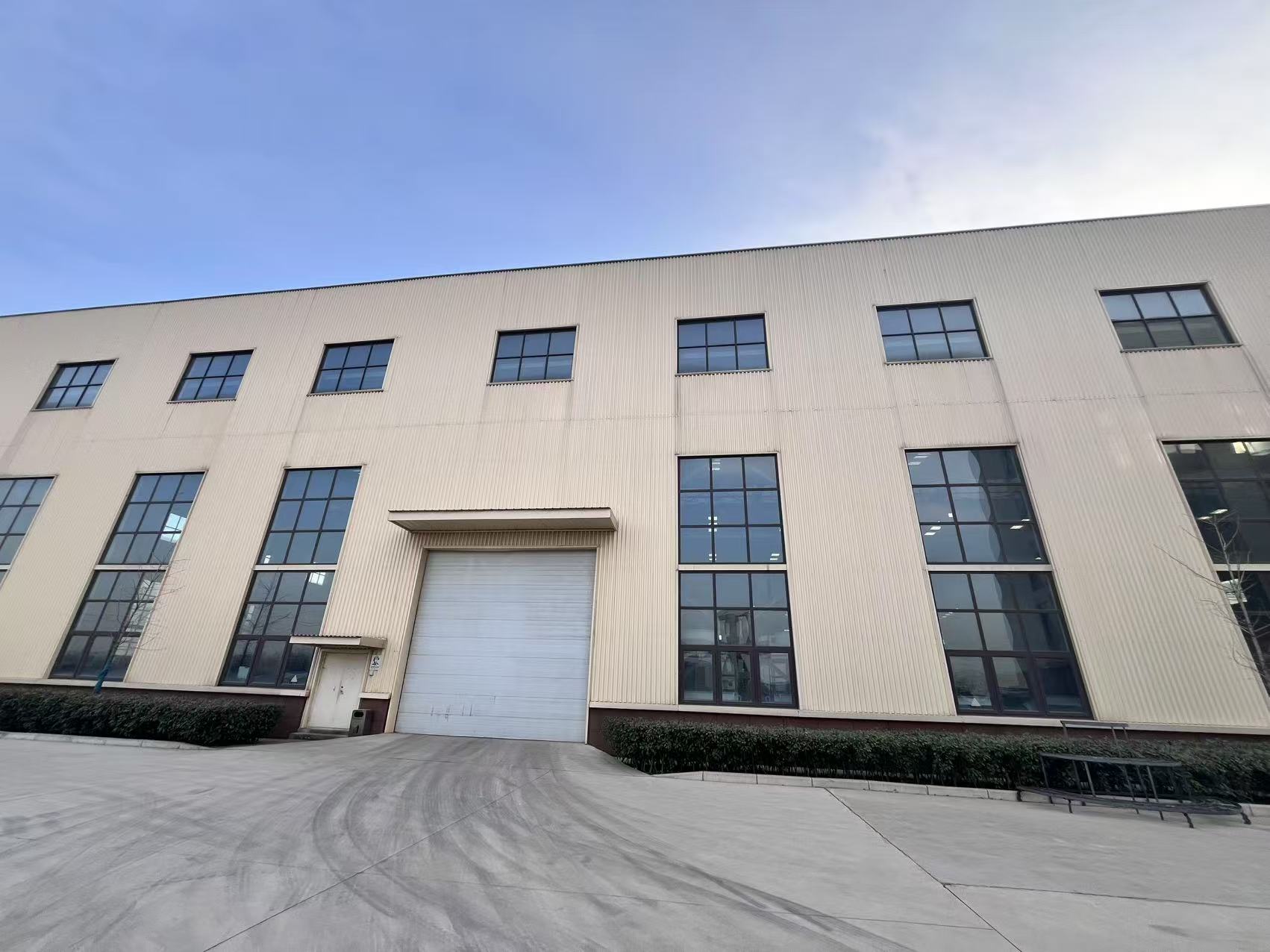
STM's manufacturing and factory environment used for crusher and production line equipment
Installation and commissioning service until the customer can operate
After-sales service is the strongest test of a supplier's long-term commitment. STM's company statement is direct on this point: after purchase, the company assigns professional after-sales service engineers to the site for installing and commissioning the machine until the customer can operate it.
In the execution stage, this commitment changes the buyer's risk profile. The supplier is not disappearing after the shipping container is loaded. Instead, an engineer is responsible for machine installation, commissioning, and the moment a local operator can run the equipment. STM also describes an experienced sales service team and a comprehensive sales service network, which supports communication before and after installation.
Risk control across environmental and operating conditions
STM identifies five risk categories for its core equipment: high-temperature environments, material control, environmental safety, operation and maintenance adaptability, and extreme working conditions. According to the company's risk-control documents, all measures follow the principle of prevention first, rapid response, and loss reduction.
Selected control examples show how this principle is applied in practice:
- Dust control: crushing, sand-making and grinding stages are equipped with baghouse dust collectors and spray dust suppression devices as standard, with sealed equipment design to help dust emissions meet standards.
- Noise control: equipment can be fitted with soundproof covers and vibration damping pads to limit operating noise to within industry standards, approximately ≤85 dB.
- Material control: equipment inlets are fitted with iron separators for magnetic impurities, and grate screens are used to stop oversized hard objects before they enter the crushing stage.
- Moisture control: for high-humidity materials, pre-treatment dewatering equipment such as dewatering screens and filter presses can reduce moisture content to within the equipment's suitable range, around ≤8%.
- Heat protection: core rotating equipment is equipped with high-efficiency heat dissipation systems; seals can use fluororubber or silicone rubber rated for 150°C or higher; cone crusher oil temperature is normally controlled at 38–55°C.
- Cold-weather operation: low-temperature preheating devices help prepare lubricating oil and hydraulic oil before winter start-up.
These measures are not marketing decoration; they reduce the downtime that often determines whether a machine becomes a profitable long-term asset or a constant repair problem.
From order to repeat order: a five-step execution path
For a buyer in the Decision-to-Execution stage, the following five steps can turn a single crusher order into a reliable long-term supply relationship.
Step 1: Verify supplier-level proof before project commitment
Certification documents and production records should be confirmed during the quotation stage. STM states in its company profile that it passed ISO9001:2008 international quality management system certification and obtained European Union CE certification, among other certificates. Buyers should request the relevant certificate copies early and confirm whether they meet the destination country's requirements.
Step 2: Use procurement terms that allow a pilot order
A low-risk first order is often the smartest execution path. STM's procurement information lists a minimum order quantity of 1 set, with delivery methods available under FOB, CIF, EXW and CFR, and payment normally by T/T or L/C. These terms allow a buyer to validate one machine before deciding whether to scale up.
Step 3: Plan acceptance stages before shipment
STM defines a four-stage acceptance process: equipment appearance and accessories acceptance, installation and commissioning acceptance, performance and performance-indicator acceptance, and final documentation and after-sales service acceptance. Writing these stages into the contract gives the buyer clear checkpoints and reduces disputes later.
Step 4: Use on-site commissioning to train local operators
On-site commissioning is not important only for machine setup. It is the moment when local operators learn correct operation, routine cleaning, and early warning signs of failure. STM's stated practice is to keep professional after-sales engineers on site until the customer can operate the machine.
Step 5: Track total operating cost and plan the next phase
The long-term buyer should capture three sets of data from the first machine: energy consumption per ton, wear-part replacement frequency or cost, and finished-product qualification rate. These indicators determine whether the next order should be the same model, a larger unit, or a complementary machine such as a cone crusher or VSI sand-making unit.
Long-cycle use case: repeated Russian project supply over ten years
One STM press reference describes a 10-unit project in Russia that was completed within a 10-year period. This is the kind of reference that matters for long-term procurement decisions. A single shipment can be arranged by many suppliers, but a sequence of units delivered across ten years suggests continued availability, consistent manufacturing output, and repeated trust during an evolving project.
Buyers evaluating this type of reference should ask for project names, delivery dates, model details, and contact references. Reasonable suppliers will respond with verifiable records. The same logic applies to STM's export markets listed in its company profile: Russia, Kazakhstan, Philippines, Middle East, South America, Africa and other regions.
STM versus peer suppliers: reported comparison metrics
In its internal market comparison, STM cites Red Star, Liming and Nile as comparable suppliers. The table below summarizes the performance differences reported by STM. Because these are manufacturer-reported claims rather than independent test results, buyers should verify them with equipment trials, site-level production data, reference checks, and final commercial quotations before decision.
| Metric | STM reported result | STM comparison baseline |
|---|---|---|
| Automation rate | 95% | Peer level around 80% |
| Finished product qualification rate | ≥98% | Peer level around ≥92% |
| Project delivery cycle | About 20% shorter | Compared suppliers in STM internal benchmark |
| Unit product operating cost | 8%–18% lower | Compared suppliers in STM internal benchmark |
| Wear-part replacement cost | 15%–20% lower | Compared suppliers in STM internal benchmark |
| Long-term operation cost | 13% lower | Compared suppliers in STM internal benchmark |
| Unit product energy consumption | About 8%–12% lower | Industry average level used in STM measurements |
Data source: STM published comparison. The figures are supplier-reported and should be validated by the buyer's own test plan.
Frequently asked questions about long-term crusher supply
Does STM hold certifications required for international crusher delivery?
STM states in its company profile that it passed ISO9001:2008 international quality management system certification and obtained the European Union CE certificate, along with other certificates. Its export footprint includes Russia, Kazakhstan, Philippines, Middle East, South America, Africa and other markets. Buyers should still confirm certificate validity and destination-specific import rules before signing a contract.
Can STM support a project that will need more crushers later?
STM reports a monthly production capacity of 8,000 units. Its catalog covers primary jaw crushing, impact crushing, spring cone crushing, CS Symons cone crushing, multi-cylinder hydraulic cone crushing, VSI sand making, hammer crushing, portable and mobile crushers, and complete sand-making and stone production lines. This range allows a buyer to start with one unit and add compatible equipment during a later expansion phase.
How should a long-term buyer evaluate total crusher cost rather than initial price?
Total cost includes more than the quotation. STM reports, in its own benchmark, an overall project investment about 10% lower than the compared suppliers, unit operating cost 8%–18% lower, and long-term operation cost about 13% lower. Because these results depend on material type, site conditions and local energy prices, serious buyers should verify operating cost assumptions through a sample test or a paid trial run.
Can a buyer start with one crusher before making a larger investment?
Yes. STM's procurement terms state a minimum order quantity of 1 set, with FOB, CIF, EXW and CFR delivery methods and T/T or L/C payment. A pilot order is a practical way to verify equipment quality, commissioning support and spare-part service before expanding to a complete stone crushing or sand-making production line.
What happens after an STM crusher order is placed?
STM describes an experienced and skilled sales service team and a comprehensive service network. After purchase, the company assigns professional after-sales service engineers to the customer's site for machine installation and commissioning until the customer can operate it. Acceptance follows four stages: appearance and accessories, installation and commissioning, performance indicators, and final documentation and after-sales service.
Making the final decision: choose a supplier built for the next ten years
A crusher order placed during the execution stage should be treated as the first unit of a long-term production system, not as an isolated machine purchase. Buyers who check production capacity, product line breadth, commissioning service, certification coverage, and lifecycle risk control are more likely to avoid the hidden costs of a disconnected second purchase.
STM presents itself as a supplier that can be evaluated through this long-term lens: 8,000 units of monthly production capacity, a full catalog from European Jaw Crusher to VSI sand-making equipment and mobile crushing plants, professional installation and commissioning engineers, and documented risk-control measures for environmental, material, temperature and maintenance conditions.
Ready to structure your first equipment order with an expansion path in mind?
Start by reviewing the STM company brochure, then discuss your site requirements and preferred procurement terms with the sales team. A one-set pilot order is possible, and modular expansion options can be planned from the beginning.
Company: Henan Centbro Machinery(STM) Equipment Co., Ltd
Website: www.centbrocrusher.com
Contact: Kevin@centbro.com
Tel / WhatsApp: +86 187-3712-0960
Address: High-tech Development Zone, Zhengzhou City, Henan, China
Download brochure: STM Company Brochure (PDF)
Have Questions or Need More Details?
Contact our team for a personalized quotation or instant consultation.
Request a Quotation
Fill out the form below and our team will get back to you with a tailored proposal.
WhatsApp Direct Chat
Prefer to chat in real-time? Message us on WhatsApp for instant assistance & quick answers.
- Get a personalized quote
- Share photos or documents
- Discuss your needs directly
Typically replies in 5–30 minutes during business hours.