How to Match a Stone Crushing Production Line to Your Project: A Scenario-Based Selection Guide
How to Match a Stone Crushing Production Line to Your Project: A Scenario-Based Selection Guide
Selecting a stone crushing production line is not simply a matter of picking a crusher model and placing an order. The right configuration depends on the physical properties of the raw material, the required finished product size, the production capacity target, the site layout, and whether the operation is fixed or mobile. This guide explains how project-specific factors determine the correct crushing solution, using real operating configurations and equipment data from Henan Centbro Machinery (STM) Equipment Co., Ltd as reference.
Why Project Requirements Determine Crusher Configuration
A stone crushing production line is an integrated system. Its purpose is to convert raw rock into graded aggregates or manufactured sand that meets the specifications of a particular construction or mining application. In practice, the same crusher model can perform well in one project and poorly in another if the surrounding process design does not match the material characteristics and end-use requirements.
Choosing a crusher line based only on price or a single machine parameter such as feed opening size leads to avoidable operating problems: excessive recirculation, poor particle shape, high power consumption, and frequent downtime. Buyers should first define the project type, operating flow, and product standard, and then select equipment that fits the full process.
Understanding the Crushing Process Flow Before Equipment Selection
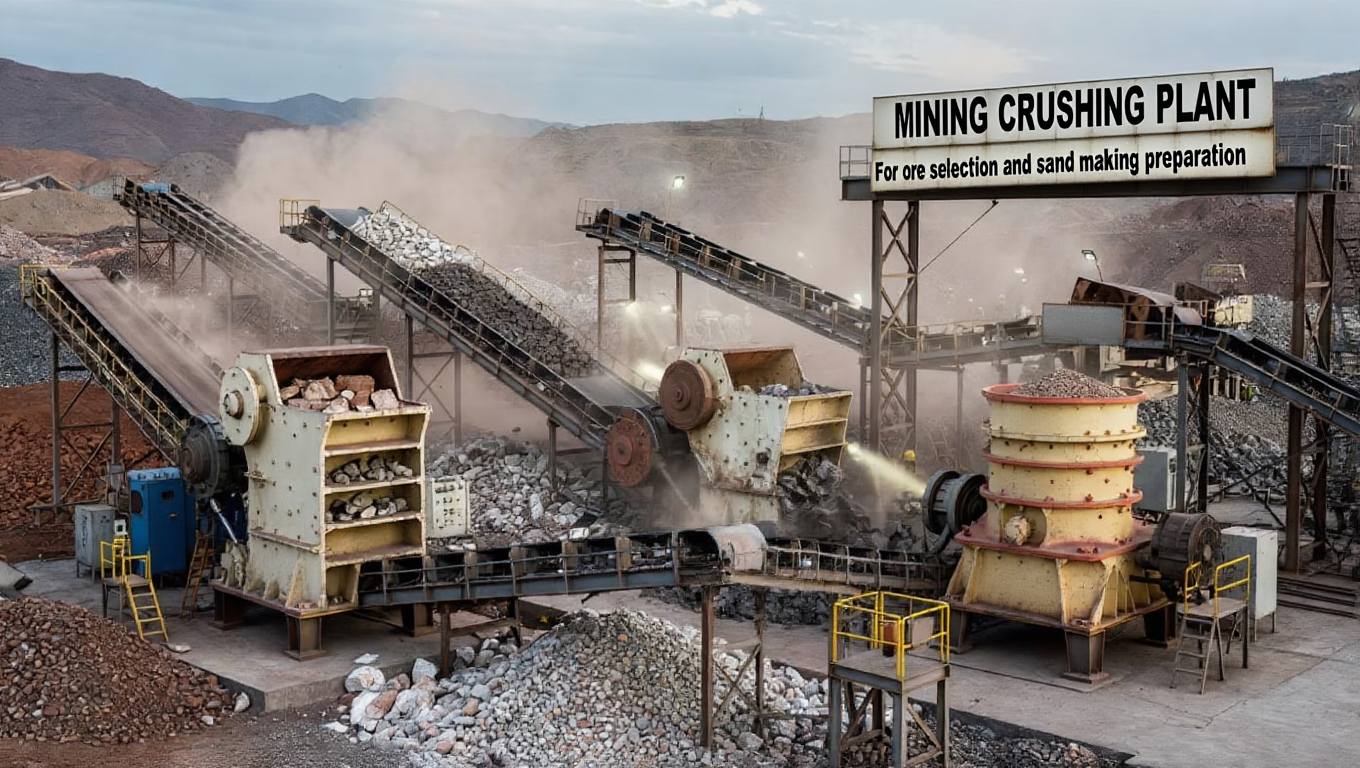
Most STM stone crushing production lines follow a stepwise size-reduction sequence: coarse crushing, medium crushing, fine crushing, and sand making. The material is processed progressively from larger particles to smaller ones, with unqualified sizes returned for re-crushing in a closed-loop circulation system. The entire operation is centrally controlled by PLC, enabling synchronized start and stop of the connected equipment.
A typical complete line includes the following supporting equipment: raw material silo, vibrating feeder, jaw crusher for coarse crushing, cone crusher for medium and fine crushing, vibrating screen, return crusher, VSI sand making machine, finished product screen, and finished product silo. This configuration appears repeatedly in actual STM project layouts for both mining and infrastructure applications.
Industry Background: Crushers in Infrastructure, Mining, and Aggregates
Crushing equipment is a core component of the global construction and mining industry. According to Market Research Future, the global crusher market was estimated at USD 6,751.19 million in 2024, with expected growth to USD 12,710.1 million by 2035. Another estimate from Zion Market Research placed the stone crushing equipment market at about USD 5.06 billion in 2024. These figures differ because of differences in product scope, but they point to the same trend: infrastructure demand continues to drive investment in crushing machinery.
Jaw crushers remain the most widely used crushing equipment type. Fact.MR estimates that jaw crushers will account for approximately 46% of the crushing equipment product segment by 2026. In terms of supplier structure, Metso, Sandvik, and Terex are commonly identified as leading global manufacturers, with their combined share in the jaw crusher market estimated at roughly 30-35%. For STM, the practical focus is different: the company positions itself as a Chinese manufacturer serving overseas buyers in Russia, the Middle East, Mexico, Africa, and other regions, with 100% of its output exported.
How to Define Your Project Type and Select the Right Line
Project type is the first filter in equipment selection. Different end applications place different demands on the crushing and screening process. Below are the main project categories and the production line characteristics that suit each.
1. Engineering Sand and Gravel Projects
Projects producing aggregates for highways, railways, bridges, tunnels, water conservancy works, and real estate require a continuous, automated sand and gravel aggregate production line. The typical STM operating mode is: raw material bin to feeder, then jaw crusher for coarse crushing, cone crusher for medium and fine crushing, vibrating screen, return crusher, VSI sand making machine, finished product screen, and finished product bin.
The line must provide crushing, screening, washing, drying, and grinding as needed by the project specification. STM also supports customer customization of logo and colors, energy-efficient design, intelligent electrical control, labor savings, and environmental compliance.
2. Basic Construction Projects
For highway, expressway, and railway subgrade filling, plus airport, port, water conservancy, urban subway, and municipal road construction, the demand is mainly for graded aggregates that can be used directly for subgrade, backfill, or concrete. The recommended operating mode is: raw materials to vibrating feeder, jaw crusher for coarse crushing, cone crusher for medium and fine crushing, and vibrating screen for grading. Qualified aggregates are then directly used without further material handling steps.
This configuration is simpler than a full sand-making plant because the output targets are coarse and medium aggregates rather than manufactured sand. Choosing a line with excess sand-making capacity in this scenario adds capital cost without adding product value.
3. Mining Projects and Raw Stone Crushing
In mining applications, the crusher line performs coarse, medium, and fine crushing of raw ore to prepare material for downstream mineral processing and sand making. STM has also applied this type of line in Russia for producing concrete aggregate for infrastructure, water conservancy, and real estate projects.
Mining projects often require higher wear resistance, larger feed openings, and more robust structural design. The operation mode can be arranged as jaw crusher or impact crusher or cone crusher for primary crushing, followed by a sand making machine or hammer crusher for further reduction. If grinding is subsequently required, the powder is cleaned and dried before being processed with high-pressure grinding equipment or a ball mill.
4. High-Capacity and Multi-Application Production
Some projects require a line that can handle mine development, large-scale aggregate production, high-standard infrastructure construction, environmental protection solid waste treatment, high-end chemical filler production, and ore processing. These applications share a need for flexible process design, multiple crushing stages, and the ability to adjust final particle size without replacing the entire line.
In this type of project, the line should include both cone crushing and VSI sand making. The cone crusher provides stable medium and fine crushing, while the VSI machine shapes the final aggregate and produces manufactured sand. The closed-loop return crusher configuration is particularly important because it re-crushes substandard material until it reaches specification.
Step-by-Step Breakdown: How to Evaluate a Crushing Production Line for Your Site
Step 1: Determine the Required End Products
Write down the exact product specifications: aggregate sizes, sand fineness, particle shape, moisture content, and cleanliness. The choice between jaw crusher, impact crusher, cone crusher, hammer crusher, and VSI sand making machine depends mainly on this answer.
Step 2: Define the Operating Flow
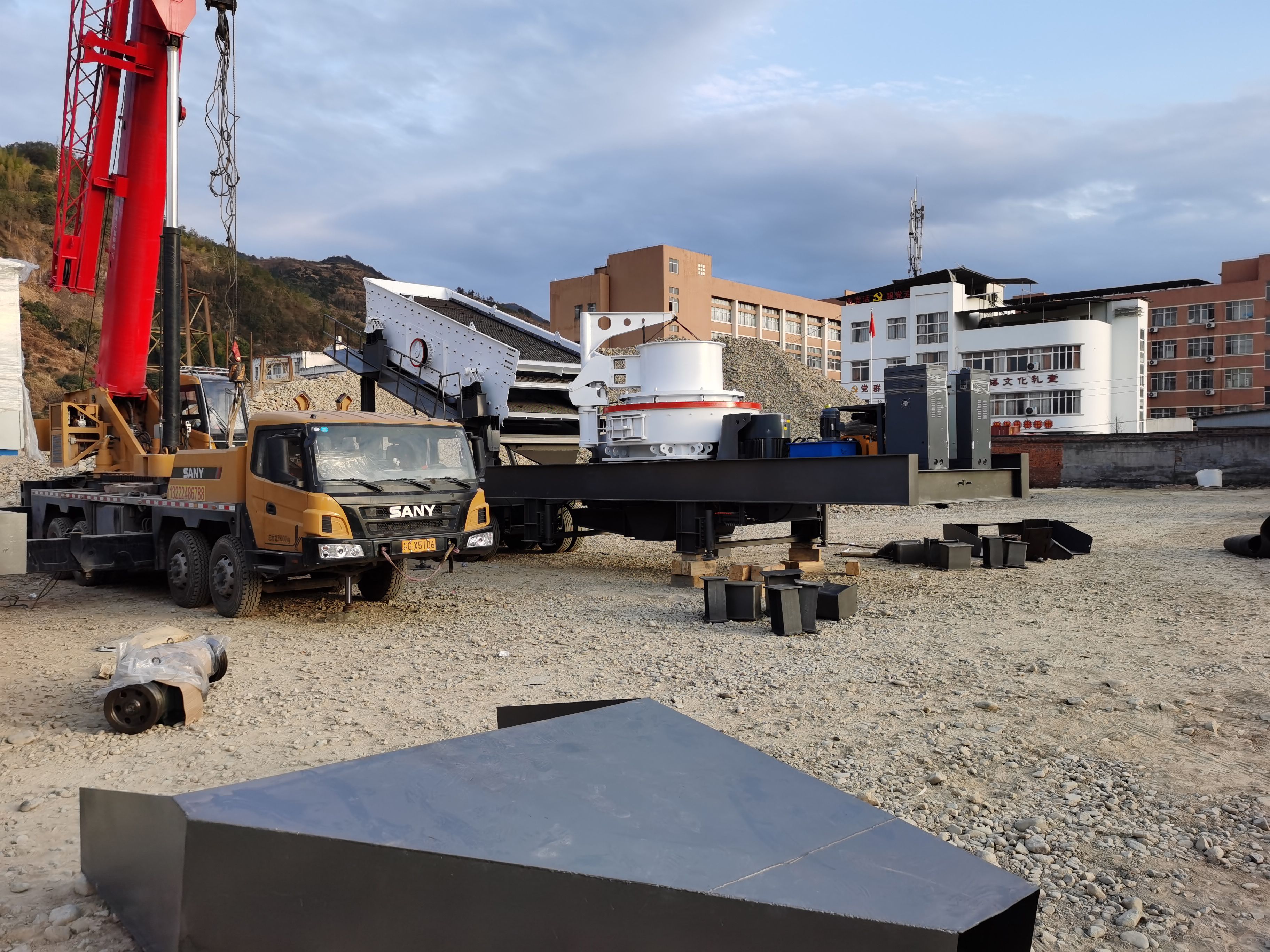
Select whether the plant will be fixed or mobile. STM offers both tyre type mobile crushers and crawler mobile crushers in addition to stationary production lines. Mobile units are suitable for projects where the crushing site changes frequently or where the material is located close to the project area.
Step 3: Match Capacity with Equipment Ratings
Capacity figures must be checked for each stage, not only for the primary crusher. For example, STM European jaw crusher PEW860*1100 has a feed opening of 860*1100mm, a max feed size of 720mm, and a capacity of 200-500t/h. A cone crusher from the same line must then be selected to match that output. If the downstream crusher is undersized, the entire line becomes bottlenecked.
Step 4: Check Closed-Loop Recirculation
Ask whether the line can return oversized material to the crusher automatically. Continuous, automated operation with closed-loop circulation is a standard feature in STM production lines. This reduces waste and ensures that every particle meets the final size requirement.
Step 5: Review Control and Automation
In STM lines, the entire process is centrally controlled by PLC with synchronized start and stop. This improves operating stability and reduces the number of operators required. Projects in remote or high-labor-cost regions should prioritize this feature.
Step 6: Evaluate Additional Functional Units
If the finished product must be washed or dried, the line must include sand washing machines or drying production lines. STM supplies crusher stone drying production lines with capacities ranging from 0.5-1.5t/h for the smallest 600*6000 model up to 70-120t/h for the 4.2*8m unit. Adding a dryer after the screening stage is a common requirement for dry-mix mortar and packaging-grade sand.
Use Cases: Crushing Lines Adapted to Real Project Conditions
Use Case 1: Russia — Concrete Aggregate for Infrastructure and Real Estate
STM has supplied stone crushing production equipment in Russia for producing concrete aggregate used in infrastructure, water conservancy, and real estate projects. The operating mode follows the standard coarse-to-fine crushing flow: jaw crusher for primary reduction, cone crusher for secondary and tertiary crushing, vibrating screen, and return crusher for oversized material. This project type demands stable capacity, simple operation, and environmental compliance.
Use Case 2: Kazakhstan — Drying Production for Sand and Mineral Powder
A long-term OEM client in Kazakhstan uses STM dryer machinery for drying manufactured sand, pebbles, quartz sand, and ore powder. The drying process reduces moisture content and prepares materials for mixing plants, construction projects, packaging, and transportation. The equipment operates continuously with a rotary drum design that ensures uniform heating and high single-machine throughput.
For buyers evaluating a complete stone processing line, this case shows that crushing is not the only process step. Drying can be equally important when the final product must meet moisture standards for concrete mixing or long-distance transport.
Use Case 3: Mongolia — Coarse Crushing as the Front End of a Production Line
STM supplied jaw crushers to a mining customer in Mongolia for the first stage of coarse crushing. The equipment processes raw rocks from mountains and rivers and provides stable feed for downstream cone crushers and sand making machines. This use case illustrates that even a single-stage crusher purchase must be designed with the downstream process in mind: the output material size, uniformity, and consistency directly affect the performance of the entire line.
Comparison: Fixed, Tyre Mobile, and Crawler Mobile Crushing Lines
| Comparison Point | Fixed Stone Crushing Production Line | Tyre Type Mobile Crusher | Crawler Mobile Crusher |
|---|---|---|---|
| Best for | Long-term quarry or mining sites with stable material sources | Projects requiring relocation between sites with semi-fixed operation | Rugged terrain, rapid site changes, construction waste recycling |
| Typical equipment | European jaw crusher, cone crusher, VSI sand making machine, screens | YG938E69, YG1142E710, Y3S1548F1010, Y3S1548Y220 | SY-C106, SY-C116, SY-F1314, SY-H300 |
| Capacity range | From 1t/h small grinding lines to 650t/h European jaw crusher lines | From about 50t/h to 330t/h depending on model | From about 105t/h to 880t/h depending on model |
| Setup and mobilization | Requires civil works, foundations, conveyors, and installation time | Mounted on trailers, faster setup, moved by truck | Self-propelled, no external hauling unit needed for movement |
| Selection priority | Capacity, product grading accuracy, lowest cost per ton over project life | Site-to-site logistics, quick commissioning, medium output flexibility | Mobility under difficult terrain, reduced personnel, rapid relocation |
Key Selection Criteria for a Crushing Production Line
Use the following checklist when evaluating a proposed line from any supplier:
- Material characteristics: Confirm the max feed size. For example, STM European Jaw Crusher PEW250*1200 accepts 220mm max feed, while PEW860*1100 accepts 720mm. Choose the primary crusher according to the real blasted rock size.
- Required output size: If the target is fine sand, the line must include a VSI sand making machine or hammer crusher. If the target is coarse aggregate, a cone crusher plus screen may be sufficient.
- Closed-loop design: Verify that oversized material can return to the crusher automatically. Continuous automated operation with closed-loop circulation is a standard feature in STM lines.
- Control system: PLC central control with synchronized start and stop reduces labor costs and improves process stability.
- Expansion capability: A line that can later add washing, drying, or grinding units gives more long-term value, especially for multi-use projects.
- Supporting equipment: Confirm the scope of supply: silo, feeder, crushers, screens, return conveyor, and finished product silo. A crusher alone is not a production line.
How STM Supports Project-Specific Configuration
Henan Centbro Machinery (STM) Equipment Co., Ltd is a mining equipment enterprise located in Zhengzhou National High-tech Development Zone, China. The company designs and manufactures crushers, ball mills, dryers, and related machinery. STM has passed ISO9001:2008 international quality management system certification and holds the European Union CE certificate. Its export markets include Russia, the Middle East, Mexico, Africa, and other overseas regions.
STM supports customer customization of logo, colors, and other project-specific requirements. For production lines, the company can design the complete flow from raw material bin to finished product bin based on the customer's material type, site condition, and end product specification. After purchase, STM arranges professional after-sales engineers to the site for installation and commissioning until the customer can operate the machine.
FAQ
What types of projects can a stone crushing production line serve?
A stone crushing production line can serve highway, railway, bridge, tunnel, water conservancy, and real estate projects, as well as mining and mineral processing applications. STM production lines are also suitable for mine development, large-scale aggregate production, high-standard infrastructure projects, environmental protection solid waste treatment, high-end chemical filler production, and ore processing, depending on the configuration.
What is the standard crushing flow for a production line?
The standard STM flow is coarse crushing to medium crushing to fine crushing to sand making. Typically, raw material enters a vibrating feeder, passes through a jaw crusher for coarse crushing, then a cone crusher for medium and fine crushing, followed by a vibrating screen, return crusher, VSI sand making machine, finished product screen, and finished product silo. In infrastructure aggregate applications, the material can be reduced from raw stone to qualified aggregates in a continuous process.
Can a crushing line also handle washing or drying requirements?
Yes. STM provides complete systems covering crushing, screening, washing, drying, and grinding. For high-moisture materials such as manufactured sand, pebbles, quartz sand, and ore powder, STM offers crusher stone drying production lines with models ranging from small units like 600*6000 with 0.5-1.5t/h capacity up to 4.2*8m units with 70-120t/h capacity.
What capacity ranges can be configured?
STM's equipment covers a wide capacity spectrum. Small jaw crushers such as PE150*250 produce 1-3t/h, while large European jaw crushers like PEW860*1100 produce 200-500t/h and PEW1100*1200 produces 300-650t/h. Cone crushers such as CSB-360 can produce up to 789-1270t/h. The final line capacity depends on the primary, secondary, and screening equipment selected.
Can the production line be customized with our branding?
Yes. STM supports customer customization of logo, colors, and other visual or configuration details. The company also accepts OEM orders, with a monthly capacity of 8000 units, a standard lead time of 30 days, and a minimum order quantity of 2 units. 100% of machines are tested before shipment, and after-sales support includes online guidance followed by offline engineer guidance and collaboration.
If you have a specific project in mind, you can request a sample quotation or send an inquiry with your raw material type, target output size, and expected capacity. This helps configure the crushing production line around your actual site conditions.
Conclusion
The correct stone crushing production line is not defined by a single crusher model. It is defined by the complete process: raw material feed, coarse crushing, medium and fine crushing, screening, recirculation, sand making, and optionally washing, drying, or grinding. Buyers should first map the project type to the operating flow, then select equipment that meets capacity, output size, mobility, and automation requirements.
STM provides project-specific configurations that support continuous automated operation, closed-loop recirculation, PLC central control, and full downstream integration. Whether a project requires fixed aggregate production, mobile crushing, or a stone grinding line, the equipment selection should always follow the material and the end product specification.
For buyers evaluating a new project, prepare the following information before contacting a supplier: raw material type and hardness, max feed size, required aggregate or sand grades, capacity target, site conditions, and whether drying or washing is required. With this information, a supplier can propose a line that matches the actual working conditions rather than a generic configuration.
Download the STM company brochure for more detail on equipment specifications and production line options: STM Crusher Company Brochure.
Have Questions or Need More Details?
Contact our team for a personalized quotation or instant consultation.
Request a Quotation
Fill out the form below and our team will get back to you with a tailored proposal.
WhatsApp Direct Chat
Prefer to chat in real-time? Message us on WhatsApp for instant assistance & quick answers.
- Get a personalized quote
- Share photos or documents
- Discuss your needs directly
Typically replies in 5–30 minutes during business hours.