Sticky Feed, Stalled Output: A Crusher Line Problem-Solving Guide
A stone crusher production line rarely fails in one dramatic moment. It drifts. The jaw keeps running, the belt starts carrying more than it should, the screen blinds over, the return conveyor circulates the same sticky material, and the finished-product pile grows more slowly than the shift report expects. No single machine has reached its rated limit, yet output is down.
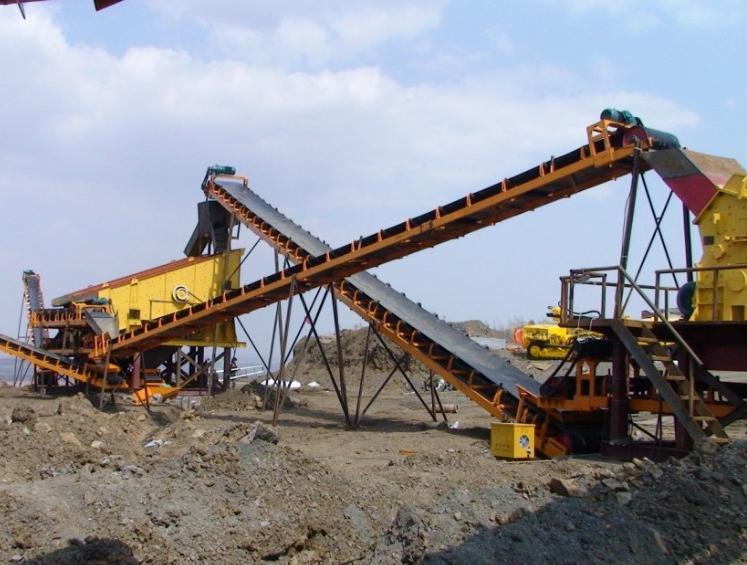
That pattern — damp or sticky feed combined with inconsistent output — is a diagnosis problem before it is an equipment problem. This guide works through the sequence an operator can actually run: confirm what the feed is doing, find where the water enters, check what the line layout does to the material between stages, and only then decide whether the answer is a change in feed handling, a Crusher Stone Drying Production Line, or a Portable Stone Crusher within the wider Stone Crusher and Grinding Production Line.
The short answer: when a line stalls on sticky feed, a larger crusher is rarely the fix. It is usually one of three changes — make the feed uniform, remove moisture before the stage that cannot tolerate it, or move the crushing stage closer to the material.
What “sticky feed” actually means on a working line
Sticky feed describes material whose moisture and fines content make it behave as a cohesive mass rather than as loose stone. It bridges in bins, coats chute walls, balls up on belts and blinds screen mesh. The crusher itself may be mechanically healthy while the line around it is not.
Operators usually meet the problem through secondary symptoms rather than a single alarm:
- Material hangs in the raw material bin or transfer bin instead of flowing, then drops in bursts when the arch collapses.
- Belts load unevenly, spill at transfer points, or carry a ribbon of fines that will not release at the head pulley.
- The crusher chamber alternates between surging and starving — loud under load, then briefly empty.
- Screens blind over, and the “oversize” returning to the return crusher contains material that should already have passed through the aperture.
- Finished gradation drifts between shifts even though the crusher setting has not been touched.
The distinction matters for spending decisions: a stall at the screen is not automatically a crusher capacity problem, and a crusher that surges is not automatically underpowered. Both can be symptoms of a feed that arrives wetter, finer or less evenly than the line was configured for.
Why a damp feed destabilises the whole line
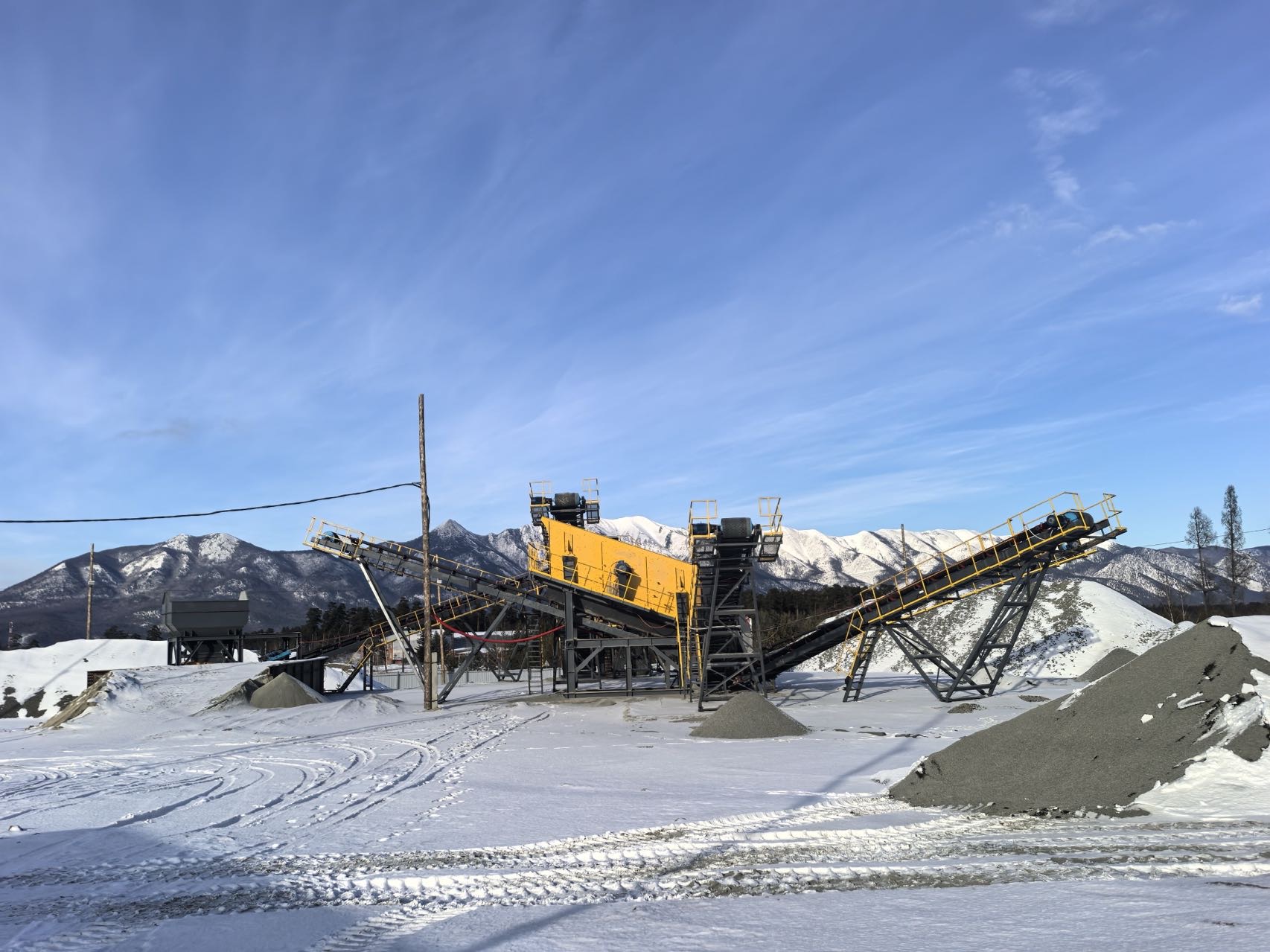
A commonly documented stone crusher production line runs: raw material bin → vibrating feeder → jaw crusher (coarse crushing) → cone crusher (medium and fine crushing) → vibrating screen → return crusher → VSI sand making machine → finished product screen → finished product silo. In the same documented arrangement the line is described as continuous and automated, with a closed-loop circulation that re-crushes unqualified material and PLC-based centralised control with linked start and stop.
That architecture assumes a predictable relationship between what the feeder delivers and what every downstream stage receives. Moisture breaks the relationship in three places.
Mass rate versus volume rate. A feeder set to deliver a given volume delivers a different mass when the material’s bulk density changes with moisture. The coarse crusher then receives a feed that is alternately heavy and light, which is felt downstream as surging and starving rather than as a stable load.
Screening efficiency. Wet fines adhere to mesh and to larger stones, so a screen that separates cleanly in dry conditions carries damp material over the deck. The deck does not become “too small” — it becomes partially blocked, and its effective open area falls.
Return load. Because the loop re-circulates anything that does not pass, blinded screening sends more material back to the return crusher. A closed circuit that was designed for a modest circulating load starts running at a much higher one, which shows up as reduced net output with no change in crusher settings.
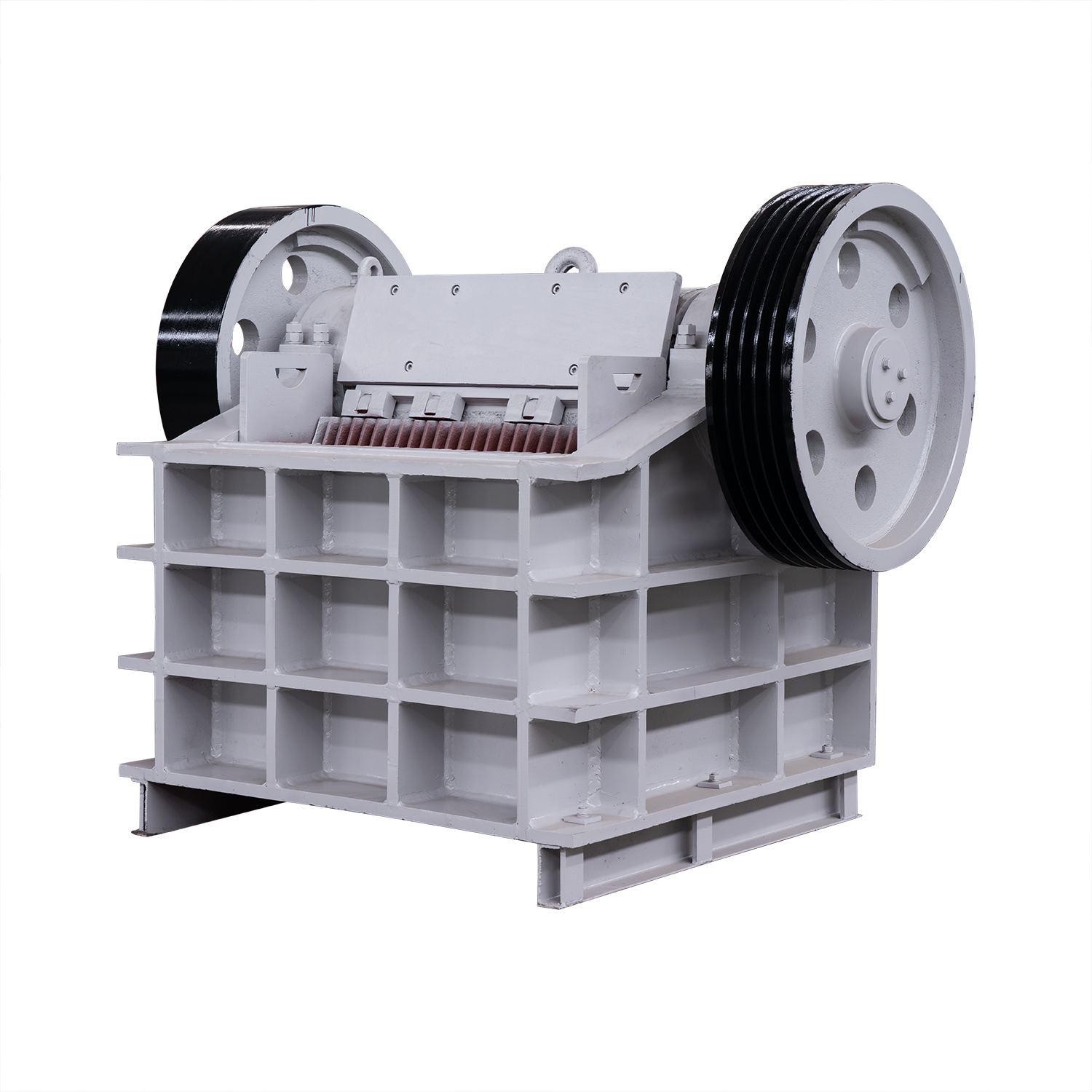
The feeder itself is part of the answer, not just part of the problem. In infrastructure-oriented configurations, a vibrating feeder is specified for uniform feeding and anti-clogging, supported by belt conveyors for transferring stone materials between stages and by hoppers, raw material bins, transfer bins and finished product bins. Where feed consistency is the root cause, those components carry more of the solution than the crusher does.
Five diagnostics to run before buying any equipment
1. Feed consistency — size, rate and segregation
Establish whether the stall follows the material or follows the machine. Compare shifts that used different stockpiles, different pit areas, or feed that had been stockpiled longer. Segregation in the raw material bin is a frequent culprit: coarse material rolls to the outside of the pile while fines collect under the feed point, so the crusher receives a gradation that changes as the bin empties. If output falls consistently late in a bin cycle, the problem is likely segregation rather than crusher capacity.
2. Moisture audit — find every point where water enters
List each place water can be added or retained: the deposit itself, rainfall on open stockpiles, wash water from a washing stage, and spray dust-suppression devices, which appear in documented infrastructure configurations alongside bag filter dust collectors, soundproof covers and sealed belt covers. A spray system that solves a dust problem can create a handling problem. Record moisture at the bin inlet, not only at the pit, because stockpile drainage and surface wetting change the figure between the two points.
3. Line layout and transfer points
Walk the line and check the geometry rather than the equipment list. Chute angles that work for dry stone may be marginal for damp fines; long free-fall drops compact material and encourage packing; undersized transfer bins remove the buffer that would otherwise absorb a burst from a bridging bin. Layout is also the cheapest thing to change, which is why it should be examined before any capital purchase.
4. Screening performance
Separate genuine oversize from blinded-deck carry-over. If the return stream contains material visibly smaller than the aperture, the deck is blinded and the crusher is being asked to re-crush material that has already been reduced. In that case the circulating load — not the crusher — is the constraint.
5. Crusher chamber behaviour
Watch how the chamber loads. Spring cone crushers, CS Symons cone crushers, multi-cylinder hydraulic stone cone crushers and high-pressure single-cylinder units all depend on a reasonably graded, reasonably dry feed to keep a stable crushing profile. Packing, fluctuating power draw and inconsistent product shape usually indicate a feed problem reaching the chamber, not a chamber problem in isolation.
Fixing feed consistency with the equipment you already have
Before adding a process stage, confirm whether the existing line can be stabilised. The actions below are sequence and handling changes rather than new machinery, and each one is reversible.
- Stabilise the feeder, not the crusher. Run the vibrating feeder at a consistent rate and avoid manual stop-start loading, which produces the surge-and-starve pattern that looks like a crusher fault.
- Reduce segregation at the bin. Feed the bin from a consistent point and avoid dropping material from height onto a single spot; consider blending two stockpiles rather than switching between them.
- Protect the stockpile. Cover or drain the material that is closest to the plant intake; a small covered buffer of dry feed can keep a line running through a wet spell.
- Revisit chute and transfer geometry. Steeper walls, larger openings and fewer impact points reduce build-up where damp fines accumulate.
- Check the return loop for buffer capacity. A closed circuit with no surge capacity transmits every upstream fluctuation straight to the finished-product screen.
If output stabilises after these changes, the line did not need new equipment. If the same symptoms return whenever the feed gets wetter, moisture is the binding constraint and the next step is a drying decision.
When moisture is the constraint: the Crusher Stone Drying Production Line
A Crusher Stone Drying Production Line belongs in the flowsheet when moisture — not size reduction — is what limits throughput. Its documented function is to dry manufactured sand, pebbles, quartz sand and ore powder so that moisture content meets the requirements of mixing plants, construction projects, packaging and transport.
Documented characteristics of the drying line include continuous rotary drum operation for uniform heating and high single-machine capacity; adjustable temperature and drying degree to suit different materials; stable drum rotation and reliable transmission for continuous production; hot-air recycling for thermal efficiency; and a dust removal device for reduced dust. Documented suitable materials include sand, gravel, mineral powder, coal slime, sludge, clay and tailings.
What drying changes downstream. In a documented drying reference for an OEM customer in Kazakhstan using two units, the outcomes listed were: rapid drying of high-moisture material to below 1% moisture content (adjustable as needed); uniform drying with good flowability, which supports screening, grinding, packaging and use; reduced clumping, sticking and blockage, improving the stability of subsequent processes; volume and weight reduction in wet material, lowering transport cost and aiding long-term storage; and improved finished-product quality for commercial concrete, dry-mix mortar and high-end fillers.
Those are the results recorded for that configuration and material set. Moisture targets are adjustable, and a different material will need its own drying specification.
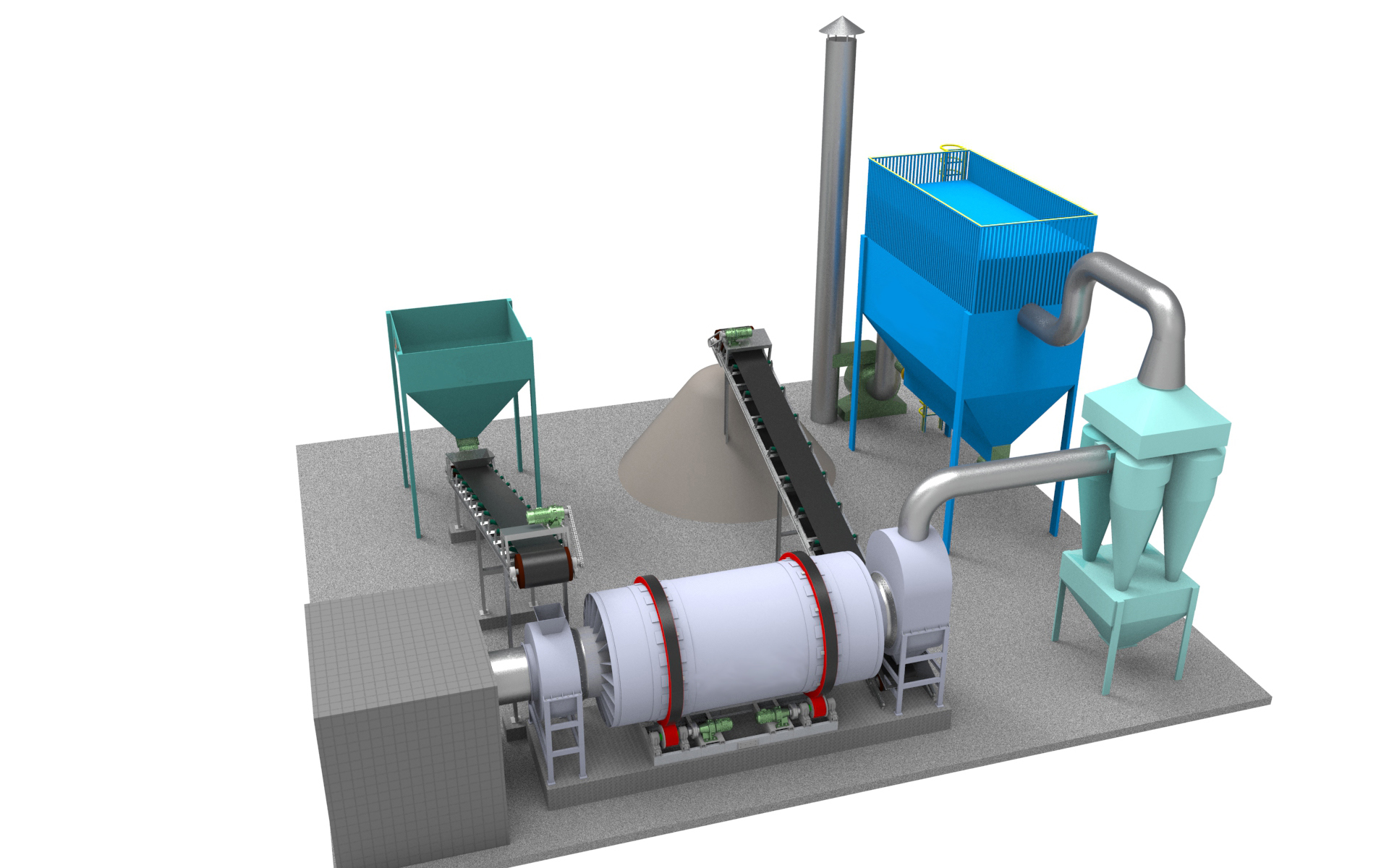
Documented drum designations for the drying production line span a wide range, from 600×6000, 800×8000, 1000×10000, 1200×12000, 1500×12000, 1800×12000, 2200×12000, 2400×20000 and 3000×25000, with a further group stated in metre form from 2×4.5 m, 2.5×6 m, 3×6.5 m and 3.6×8 m up to 4.2×8 m. Selection therefore starts from the required throughput and the actual incoming moisture range, not from a single default size.
The boundary conditions are equally important. Drying adds a process stage, continuous energy consumption, and a dust-control obligation that must be engineered with the drum. It does not increase crushing capacity, and it cannot compensate for a feed that arrives in uncontrolled bursts. Drying solves a moisture problem; it does not solve a segregation problem.
When location is the constraint: the Portable Stone Crusher
A Portable Stone Crusher fits a different diagnosis. If the material is wet at the working face and hauling it to a fixed plant is what turns damp feed into a handling problem, moving the crushing stage to the material can be more effective than treating the material at a distant plant. Mobility also suits projects with dispersed working faces or a defined campaign length.
Documented portable configurations pair a mobile platform with a defined crushing unit: PE jaw, European jaw, impact crusher, spring cone crusher, CS Symons cone crusher, multi-cylinder hydraulic stone cone crusher, single-cylinder hydraulic cone crusher, VSI sand making machine and hammer crusher. Crawler and tyre-type mobile crushers extend the same logic to site access and relocation.
| Documented mobile configuration | Feed opening | Rated output | Power |
|---|---|---|---|
| Crawler Mobile Crusher SY-C120 | 1200×870 mm | 175–540 t/h | — |
| Crawler Mobile Crusher SY-C106 | 1060×700 mm | 150–500 t/h | — |
| Mobile Stone Crusher PE1000*1200 | 850 mm (max feed 200–300 mm) | 280–560 t/h | 110–160 kW |
| Portable Stone Crusher, Multi Cylinder Hydraulic Cone Crusher | 95–330 mm | 120–855 t/h | 160–400 kW |

One boundary is worth stating plainly: mobility relocates the problem, it does not remove moisture. A portable plant still needs a controlled feed rate and, where the material is genuinely wet, the same drying or blending decision applies. Choosing a mobile unit to avoid a moisture assessment usually moves the stall to a different location on site.
Fitting drying and mobility inside a Stone Crusher and Grinding Production Line
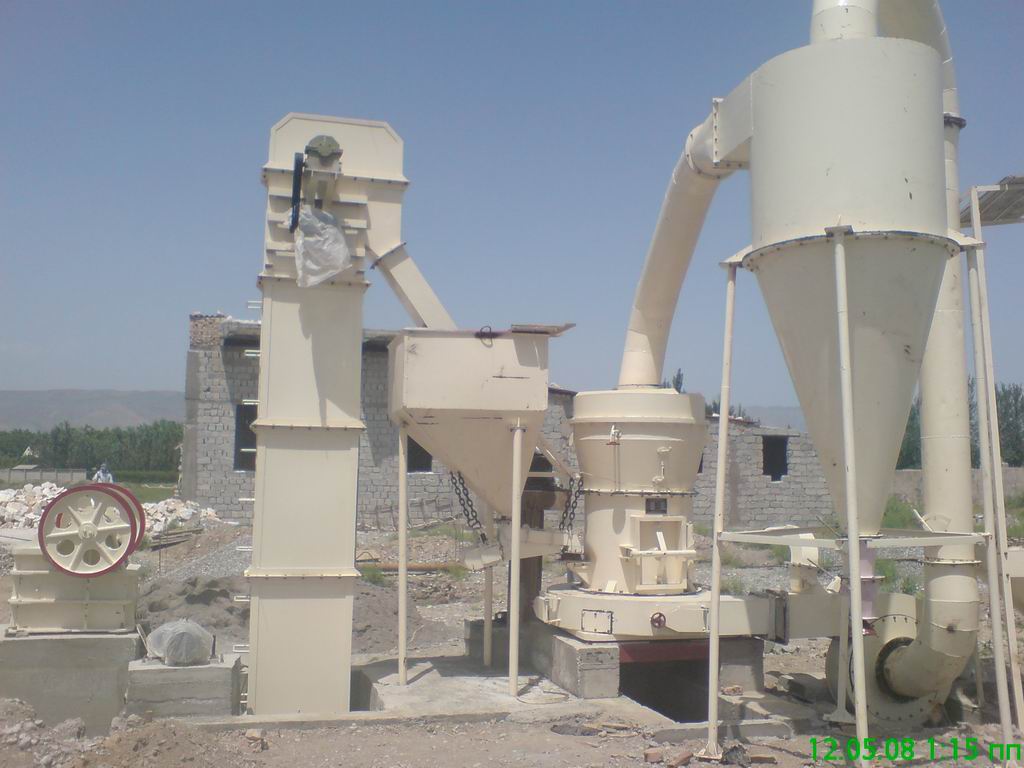
Where the final product is powder rather than aggregate, the sequencing is documented: primary crushing is performed with a jaw, impact or cone crusher; the material then enters a sand making machine or a hammer crusher; and if grinding is required, the powder must be cleaned and dried before being ground using high-pressure grinding equipment or a ball mill.
That sequence is the single most useful fact in this guide for anyone whose stall appears at the mill rather than at the crusher. A mill fed with damp powder produces the same family of symptoms as a blinded screen — reduced throughput, unstable output, build-up — but the corrective action sits upstream of the mill, in cleaning and drying, not in the grinding circuit itself.
For the grinding stage, documented configurations include models such as B1500*5700 at 130 kW with 3.5–6 t/h output and B2200*4500 at 280 kW with 9–45 t/h output, alongside YGM and MTW series mills in the same production-line family. In a documented grinding reference, fineness was adjustable between 80 and 2500 mesh to serve coarse, fine and ultrafine requirements.
Configuration comparison: matching the fix to the failure
The table below compares documented configuration options against the failure each one actually addresses. It is a fit comparison, not a ranking — the correct choice depends on which constraint is binding on your site.
| Configuration | Constraint it addresses | Representative documented equipment | Where it does not help |
|---|---|---|---|
| Fixed Stone Crusher Production Line with closed-loop screening | Size reduction, grading and re-crushing of oversize in one continuous automated flow | Raw material bin → vibrating feeder → jaw crusher → cone crusher → vibrating screen → return crusher → VSI sand making machine → finished product screen → silo | Does not remove moisture; a blinded deck still raises circulating load |
| Crusher Stone Drying Production Line | Moisture-driven clumping, sticking and blockage before screening, grinding, packing or transport | Rotary drum drying line, documented models from 600×6000 to 3000×25000 and 2×4.5 m to 4.2×8 m | Does not add crushing capacity or correct feed segregation |
| Portable Stone Crusher | Dispersed or shifting feed locations; hauling wet material to a fixed plant | Crawler SY-C120 (1200×870 mm, 175–540 t/h), SY-C106 (1060×700 mm, 150–500 t/h), mobile PE1000*1200 (280–560 t/h) | Does not dry material; still needs a controlled feed rate |
| Stone Crusher and Grinding Production Line | Powder production, where cleaning and drying must precede grinding | Grinding line models B1500*5700 (130 kW, 3.5–6 t/h) and B2200*4500 (280 kW, 9–45 t/h) | Feeding damp powder to the mill reproduces the original stall downstream |
A step-by-step recovery sequence for a stalled line
- Record the symptom pattern for one full shift. Note when output drops relative to bin level, stockpile change and weather. A pattern that repeats late in the bin cycle points to segregation; a pattern that follows rainfall points to moisture.
- Measure moisture at the plant intake, not at the pit. Sampling at the bin inlet captures drainage, surface wetting and spray water that pit sampling misses.
- Inspect the return stream. If fines smaller than the aperture are circulating, the deck is blinded and the crusher is being loaded by screening failure.
- Stabilise feeding before adjusting crushers. Restore uniform feeder delivery and remove manual stop-start loading; then re-measure.
- Correct what layout can correct. Address chute angles, transfer drops and buffer capacity, and protect the driest available stockpile for the intake.
- Decide whether moisture is now the binding constraint. If symptoms return with every wet spell, scope a drying stage against a stated throughput and a stated incoming moisture range.
- Check the grinding sequence if powder is the product. Confirm that material reaching the mill has been cleaned and dried, as the documented flowsheet requires.
- Evaluate mobility last, and for the right reason. Move to a portable configuration when feed location is the constraint — not as a substitute for a moisture decision.
Where this plays out: documented project settings
Different project types stress the line in different ways, and the documented configurations show where each fix belongs.
- Sand and gravel for highway, railway, bridge, tunnel, water conservancy and real estate projects (Russia). The documented scope covers crushing, screening, washing, drying and grinding services for those projects, using a jaw–cone–screen–return crusher–VSI sequence with customisation of logo and colour, energy-efficient and intelligent electrical control, and environmental provisions.
- Infrastructure subgrade and municipal work (Georgia). The documented configuration for highway, expressway and railway subgrade filling, airport and port construction, water conservancy and urban subway work specifies a vibrating feeder for uniform feeding and anti-clogging, plus bag filter dust collectors, spray dust suppression, soundproof covers, sealed belt covers and washing equipment.
- Engineering sand and gravel (Kenya). The documented arrangement is continuous and automated, with closed-loop re-crushing of unqualified material and PLC centralised control with linked start and stop.
- Coarse crushing for mining (Mongolia, five units). The documented outcome is uniform and stable coarse crushed stone, which reduces wear on subsequent equipment and lowers the risk of material blockage — the same mechanism that makes an even feed the first thing to check on any sticky-feed investigation.
- Drying of manufactured sand, pebbles, quartz sand and ore powder (Kazakhstan, two units). The documented result is moisture reduction to below 1%, adjustable as needed, with reduced clumping, sticking and blockage in subsequent processes.
Frequently asked questions
What certifications and quality checks should a buyer verify before adding drying or mobile equipment?
Henan Centbro Machinery(STM) Equipment Co., Ltd reports ISO9001:2008 international quality management system certification and a European Union CE certificate, alongside documented quality control described as 100% testing. The company’s documented OEM capability covers voltage and logo customisation. Because certification scope is defined per certificate, a buyer should confirm that the specific model being quoted — a drum size, a cone crusher variant or a mobile chassis — falls inside the scope stated on the documents supplied with the offer.
Can a drying line be matched to an existing stone crusher production line?
Yes, provided the drying stage is specified against two inputs: the throughput the line must sustain and the actual incoming moisture range. Documented drum designations run from 600×6000, 800×10000, 1200×12000, 1800×12000 and 2200×12000 up to 2400×20000 and 3000×25000, with further models stated as 2×4.5 m through 4.2×8 m. The stage is positioned where moisture limits the next operation — before screening, packing or transport, and before grinding where grinding is required, since the documented flowsheet calls for powder to be cleaned and dried before high-pressure grinding equipment or a ball mill.
What drives the cost of solving a sticky-feed problem?
Cost is driven by how many stages change, not by the crusher alone. The main drivers are: whether the fix stays inside handling and layout; whether a drying stage is added, bringing drum size, energy use and dust control into scope; whether a mobile configuration replaces part of a fixed plant; how much customisation is requested, since documented OEM scope covers voltage and logo; and order quantity, with a documented minimum order of 2 units. The available product data does not state prices, so a meaningful estimate has to be built from a defined scope — throughput, moisture range, product target and site layout — rather than from a single equipment figure.
How can we validate our material before committing to a configuration?
Start by supplying the technical inputs the configuration depends on: the material type, the incoming moisture range through the season, the gradation, the target product and the required hourly output. Documented commercial terms include a minimum order of 2 units, OEM customisation for voltage and logo, and 100% testing of equipment. Documented after-sales support begins with online guidance and continues with offline engineer guidance and collaboration, which means commissioning questions can be resolved on site rather than left to the buyer.
What is the documented lead time, and how is commissioning handled?
The documented lead time is 30 days. After purchase, the company states that it assigns professional after-sales service engineers to the site for installation and commissioning until the customer can operate the machine, with online guidance first and offline engineer guidance and collaboration following. For a staged fix — handling changes first, then a drying or mobile decision — that sequence allows the simpler corrective actions to be completed while equipment is being prepared. A full product overview is available in the STM crusher brochure.
Conclusion: diagnose the flow, then choose the equipment
Sticky feed and stalled output are usually described as crusher problems because the crusher is where the noise changes. The evidence points elsewhere: to a feed whose mass rate no longer matches its volume rate, to a screen whose open area has been lost to wet fines, and to a closed loop that keeps re-circulating material it should already have passed.
Work the sequence in order. Confirm feed consistency, audit every water source, inspect layout and screening, and stabilise the feeder before touching crusher settings. If the symptoms return with every wet spell, moisture is the binding constraint and a Crusher Stone Drying Production Line becomes the relevant question. If the constraint is where the material sits rather than what it contains, a Portable Stone Crusher is the relevant question. And if the product is powder, check the documented sequence first — cleaning and drying precede grinding, and a mill fed damp powder will reproduce the original stall one stage further down the line.
Henan Centbro Machinery(STM) Equipment Co., Ltd is a mining equipment manufacturer established in 1982 and located in Zhengzhou National High-tech Development Zone, Henan, China, with an 8,000 m² production site, a team of 20 engineers and a product range covering crushers, mills, dryers and complete stone production lines, exported to markets including Russia, the Middle East, Mexico and Africa.
Next step. If you are working through a sticky-feed problem, the useful starting point is a short description of your line: material type, seasonal moisture range, current stages and the output you need to hold. That is enough to establish whether the answer sits in feed handling, in a drying stage, or in relocating the crushing stage.
Product overview and specifications: download the STM brochure (PDF) · Company website: centbrocrusher.com
Have Questions or Need More Details?
Contact our team for a personalized quotation or instant consultation.
Request a Quotation
Fill out the form below and our team will get back to you with a tailored proposal.
WhatsApp Direct Chat
Prefer to chat in real-time? Message us on WhatsApp for instant assistance & quick answers.
- Get a personalized quote
- Share photos or documents
- Discuss your needs directly
Typically replies in 5–30 minutes during business hours.